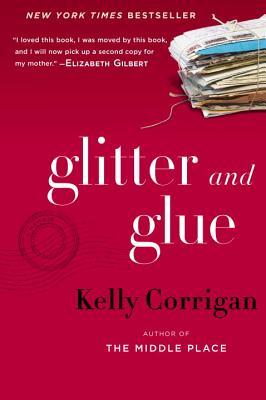
Glitter and Glue, by Kelly Corrigan*****

GLITTERANDGLUE

Whoops, nearly forgot! Thank you, thank you to Ballantine Books and the First Reads program at Goodreads for permitting me to read this book free and in advance!

This isn’t Corrigan’s first book, and it shows. At first it appears to be light, fluffy material, a beach read. The confidential one-gal-to-another tone may create the illusion that we’re going to sit down over a cup of coffee and have a little chat, just us, and the book.

It goes deeper than this, though. The complexity of relationship between mother and daughter is not a new topic, but Corrigan is a strong writer, and she makes it feel new. She recounts how she had saved her money so that she could leave home to find out who she was, following college graduation. She needed to go out into the world to do that, she explained to her mother, who thought she should do something more practical with her nest egg.

In Australia, Corrigan runs low on money, and she finds herself signing on as a temporary nanny. The dad has just been widowed, and his 5 and 7 year old children are smarting from the loss. Reminders of “Mum” and mortality seem to be everywhere. And Corrigan, who is for better or worse playing the role of surrogate mother, finds herself channeling her mother. Everywhere she goes, her mother is still in her head. I recognize some of the truisms and turns of phrase from my own mother, though I am about a decade older than Corrigan. And gradually, Corrigan comes to realize that what her mother had said before was true: her father, who always praised her and was always positive, but didn’t deal with any of the details of raising her or disciplining her, was the glitter. Her mother was the glue.

Later she comes to realize that there is not one woman inside each woman, but dozens of them: the mother who has always seemed a trifle harsh, undemonstrative, curt, and (my word) anal at home is “a hoot” at the office. Everyone finds her hilarious there. She isn’t trying to be anyone’s role model, so she cuts loose. What a revelation!

Two favorite moments: toward the beginning when she is a “classic” snoop while babysitting. Whoa, I totally did that, and my friends did too! We used the house phone where we were babysitting to call each other up and announce our findings! Funny. Another favorite was toward the end, when the author, fuming a bit at home in San Francisco because she has been back home to her folks many times, but her mother hasn’t visited her, is told by a friend that she needs to invite her mother. “Maybe she thinks you don’t care.” Again, hell yes! My own mother instilled in me the notion that once your kids are grown, you don’t push yourself at them, sure as hell don’t drop in on them. I have been inside my own son’s house just once, and last summer he made an ironic remark about it. Hey, I was waiting for the invitation! Last thing any mom wants is for her kid to pull back the curtains and hiss to whoever is present, “Oh crap. It’s my mom.” *cringe!*

Ultimately, Corrigan experiences the role reversal that inevitably must come, and she becomes her mother’s glue when she falls ill. Her father is still the glitter.

I end a lot of reviews by saying that the reader shouldn’t pay full cover price, but consider reading it if your library or used book store has it. Not so this time. If you love an accessible yet intelligently written memoir as much as I do, cut loose and buy this when it’s released. If not for yourself, read it for your family. You’re bound closer than you may think.

All We Had: A Novel, by Annie Weatherwax*****

All We HadThis quirky, funny, poignant story had me from hello. How often have you read a really strong mother-daughter novel? The legendary Marge Piercy brought some our way, and of course Amy Tan. Does Annie Weatherwax deserve a place in such auspicious company? I think she does.
Ruth and her mother have nobody and nothing, apart from each other and whatever they can throw in the car, and most of that stuff might not actually belong to them. They sleep together on whatever flat surface is available, sometimes a nasty mattress in an unfinished basement, but they call no place home.
Sometimes it seems more that Ruth is raising her mother than the other way ‘round, and so the fur flies when her mother suddenly decides to exert authority.
Does this sound like anyone you have known? It rings true to me. I’ve known people like this, both professionally and in my personal life. A friend in social work once told me that this “type” of kid keeps it together until she is in her mid-20s and then falls apart, because she didn’t get to scream and act out as an adolescent. At least in developed Western societies, the adolescent stage is necessary to development; if a kid can’t do it at the socially acceptable time of life that most people do, she’ll do it later.
And the fact that I found myself thinking such things, making such predictions for a fictional character, proves exactly how real Ruthie and her mother became to me as I gorged on the literary feast Weatherwax has cooked up. I was notified by Net Galley that since the book was coming out August 5, it would be nice to have my review run in early August, just before its release, and so I set the galley aside when I hit 60 percent. Later, I told myself. You can read it later.
I couldn’t stand it. I have over 100 unread books, most of them used, some of them galleys with a sell-by date on them, but I dove back in mid-July, like a dieter on a chocolate binge. I’ll run this review on my blog in July and then run it again in August, because All We Had is not just any story. It’s the story that couldn’t wait.
Rejoining mother and daughter, then, we head westward. Mom is determined that come what may, Ruthie will go to college, and she has her eye on the Ivy League schools. No matter how many boyfriends she takes up with, moves Ruthie and herself in with, and then books it (sometimes with the guy’s car and almost always with some of his money), their journey continues toward New England.
That is, until they come to Fat River, Ohio, a place that proves exceptional. It is here that Ruthie becomes fast friends with Peter Pam, the transvestite waitress at the local diner. People are different here in Fat River. Nobody has a lot of money, but there is such character here, a sense of community surpassing anything they had ever believed was possible for people like themselves, and the cynical, wise-cracking, foul-mouthed Ruthie and her mom find their defenses breaking down, a bit at a time, as the town takes its hold on their hearts.
What happens from there you will have to learn by yourself. I couldn’t tear myself away. I don’t know whether this book will be a best seller, but I do know that I would have been the poorer for not having read it.
Highly recommended!

Bringing Down the House: The Inside Story of Six MIT Students Who Took Vegas for Millions, by Ben Mezrich****

Suspenseful and great fun; nonfiction. My son has a good friend who has been a professional gambler for years. He doesn’t do what these guys do, though, because it’s true, you do become unwelcome once you have won too many times, or if you come in as a team.(It seems credible, too, that it might be illegal to signal someone to come join a card game at the very moment you know the shoe is loaded with face cards and aces).

It’s an exciting book to read–and I’ve read it twice–simply because it is so daring, and Vegas seems like such a powerful entity to challenge. I am glad the writer did not include all the casino names and the minutiae that others seemed to crave. For one thing, the urban topography of Vegas changes constantly. The MGM burns to the ground, is rebuilt further up the street. A couple of casinos don’t do well and go under, but then Steve Winn throws up some brand new ones…I think if the writer had become too specific with each and every casino, color scheme, manager’s name, etc., it would have become irrelevant within a year, as employees change, walls are repainted, casinos are razed to put up mega-casinos.

For the rare few, like the fellow I know, who have such brilliant memories and math skill that they always remember what each player at a table has played and how many face cards and aces have shown out of a six-deck shoe (set of cards the casino uses for its patrons), the only way to win consistently, though of course not every time, since luck is a factor, is to go and play at tables with other players, never against the house. Our friend of the family also makes it a point to order one strong drink and nurse it steadily throughout the night, so everybody else is drunk and he is sober.

This reviewer, being a liberal arts type and no kind of math wizard, spent an entire week in Vegas once and did not gamble a single penny. Saw lots of great shows, watched other people bet astonishing amounts of money…and then went out to eat somewhere awesome. I spent a lot of money, but lost none of it. But teachers are generally sensible that way.

Obviously, this book was not published because of the writer’s skill with prose, but with such an interesting story to tell, I am glad it was published. I greatly enjoyed it, and passed my copy on to a couple of friends before I sent it to a charity used-book sale. This is light reading, but also a page-turner. If it sounds like something you might enjoy, read it. Just don’t regard it as an instructional manual that will lead to great riches, unless your skills are similar to those of the folks at MIT.

Darling Jim, by Christian Moerk****

The writer makes his English novel writing debut with this book, which I snatched off a sidewalk cart for two bucks. Wow! It is, as he explains in the back pages of the book, like a Russian doll: a story, within a story, within a story, within a story, 4 plots nested inside of one another.

Some writers just start writing and see what comes out, then edit just a little. (Stephen King, a personal favorite of mine, comes to mind). But this writer begins with a 75 page outline with snippets of dialogue, all planned out carefully, before he commences writing. Truly remarkable. On top of it all, it was originally written in English, although the writer is Danish, and the story set in Ireland. (The Danish publication came out first, but the English draft was submitted first; the writer did the Danish translation himself).

If you like memoirs; ghost/werewolf/vampire stories (or at least an implication);or if you have a soft spot for the outlying regions of Ireland, where a latte is available but legends and superstitions sometimes still hold sway, find a copy of this book in whatever language you like (just about) and snuggle before the fire. Eat first, and have something to drink with you; you’ll be awhile.

Dead Little Dolly, by Elizabeth Kane Buzelli ****

  This is the first title I’ve read of this engaging cozy mystery series created around Dolly, the local sheriff of a tiny mid-western town. The setting, located in Northwestern Michigan, is original and well conceived; the pacing and transitions are deft and clearly the work of an experienced writer. Best of all are the characterizations, which are colorful and distinctive without being so wildly eccentric as to become caricatures or stereotypes.

I will admit that when it comes to cozy mysteries, I am a hard sell. I want working class protagonists, first off; no wealthy people on cruises or in drawing rooms for me (Dame Agatha Christie as the legendary, sole exception to my rule). I don’t like to see improbable individuals solving crimes that go right over the heads of the police, and I will not read a cozy mystery I even suspect may contain a recipe somewhere. If a novel needs recipes to sell, it’s not much of a novel.

Dead Little Dolly meets all of my snooty criteria. The title character, Dolly, is the sheriff of her tiny town, and has all sorts of family baggage that comes into play. Her mother abandoned her as an infant to join some religious cult in France, and now that she is a single mother, she sternly rejects her grandmother’s wish to contact said long-gone mother. I loved what Dolly had to say about her mother’s lack of responsibility and what might have happened because of it: “How’d she know I’d turn out so good?” This really cracked me up.

There are a couple of somewhat weak spots: the notion that Emily, the journalist, must keep news of our crime prominent in the local press “to keep the pressure on” is nonsense. When this is done, on whom is the pressure supposed to be placed? On THE POLICE. In this case, the police–a force of one–is the victim, and already highly motivated to solve the crime. Are we seeking the assistance of the FBI? No. There is no basis for it, and it is not mentioned. So this particular chunk of motivation is weak.

However, the story is so riveting and such great fun that I was ready to overlook that bit, and indeed kept reading well past my bedtime.

A particularly delicious secondary plot was the coming nuptials of an 80-year-old bride. Her mother had been against the match, and they had waited till her death to wed. The old bird lived to be 101 years old, and now a certain amount of haste was required to give the newlyweds a maximum period of wedded bliss. (I confess this made me think a bit of my favorite aunt, who was widowed at 30 and remarried at 70.)

Dead Little Dolly is a good fun romp, exactly what the doctor ordered when you need a beach read or a little something to take your mind off of your own worries. If you enjoy a good cozy mystery, this one is highly recommended.

Kinsey and Me: Stories by Sue Grafton *****

This wonderful collection is quirky, but not only in the manner in which the now-immortal Kinsey Millhone is quirky. I suspect it’s the closest Grafton will ever come to writing an autobiography or memoir, and what little of it is here, is very brave stuff. As we approach the time of life in which Grafton now finds herself, it’s good to do some looking back, figuring out why we did some of what we did, and also coming to terms with some of the less lovely things we went through.

The introduction is expository in nature, and it’s very good. It is the first time I’ve seen it spelled out, what the distinction is between mystery, detective fiction, and crime fiction. In addition, she speaks to the ways in which short stories differ from novels within her genre. She makes it crystal clear and wraps it up with a bow. No droning lecture, but of course, that isn’t Grafton’s style; not ever. She also attempts to differentiate herself from her character. When she says Kinsey is who she might have become had she remained single and childless, I believe her. When she says that mischievous sense of humor is Kinsey’s rather than her own, I don’t believe it for a minute. But it’s a very fun read, one of the most interesting introductions I have ever read.

The first section consists of some Kinsey short stories that were written, some of them published in magazines, prior to the takeoff of the alphabet series. They are every bit as good. I am very fond of collections and anthologies, because they give me permission to put the book down at some point and go do something else…sleep, for instance. Though shorter, they are every bit as good as her longer work.

The last section is one that Grafton says was created largely from her own effort to come to grips with her own past as the child of two alcoholic parents. I think somewhere along the line, every really prolific reader hits a piece of writing that unexpectedly punches them in the solar plexus, leaves them staring disbelieving at the page saying, “Aw, holy shit, I totally did that too!” This was one of those moments for me. I have read thousands of books and had moments like this one maybe three times. It won’t be the same for you, most likely, but if you are a fan of Grafton’s, it is still worth reading. There follow some stories that are not humorous, but strong writing nevertheless.

Because she so effortlessly switches hats so many times in this one volume, first providing us with the most informative, most accessible, best written overview of the genre I have come across; then offering some brief personal notes about herself; then giving us the detective humor that we have come to know and enjoy; then writing briefly and more soberly about her own past; and then breaking out the stark, somber short stories that caught me by surprise, she underscores exactly what a serious, bad-ass writer she is. She is not just a writer of funny detective stories, though I consider those books to be excellent literature, and I love them. She is a scholar, and I can’t help wondering if that wasn’t a good part of the reason she put this volume together in the twilight of her career. We must regard her a serious writer, a woman of great talent. That’s what she is.

A Bad Day for Sorry, by Sophie Littlefield*****

abaddayforsorryWhat? Five stars for this, a beach-read type novel? Well yes, because I think it is among the best in its genre. This darkly hilarious tale is really strong. It’s well paced and has enough quirkiness to be endearing without seeming overdone or contrived.

How many women out there have been subjected to domestic abuse? In talking with friends old and new, parents and students, colleagues and neighbors, I am amazed to see how many women go through it. It takes different forms; sometimes it is they who have been abused, and sometimes they learn, to their horror and sometimes guilt (for not having picked up on the cues), it is their children.

Domestic abuse is never funny.

The reason this story works is that it takes the inner vigilante that lurks within the hearts and minds of those who have been abused or love someone who has, and it plays out all sorts of revenge fantasies that in real life just can’t happen. This first in the series was nominated for all sorts of awards, and the competition must have been stiff or it would have won.

You can win, if dark humor appeals to you as it does to me, by getting this well-crafted spin and reading it.

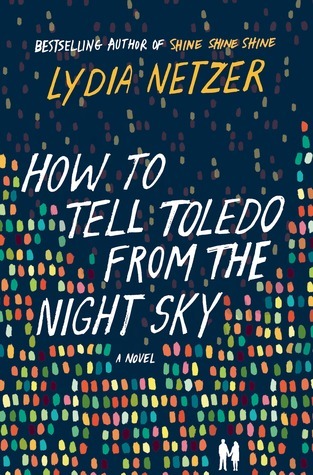
How to Tell Toledo from the Night Sky, by Lydia Netzer *****

  Imagine a complete collection of the Great Books. Add in all those that have won Pulitzers and the National Book. Do you see room for one more? If not, you’ll need to grab the title you never really thought belonged in this collection and toss it. Now, go ahead and slide this title in there, because it is where How to Tell Toledo from the Night Sky belongs.

The story is about a pair of astronomers who were meant for one another on a whole lot of levels, but if, like me, astronomy bores you, this wonderful, quirky romance won’t. It contains a number of story elements that don’t usually appeal to me; the presence of a very unscientific sort of clairvoyance is one that usually causes me to close my book abruptly. This time, the story had me from hello, and it was going to take a lot more than that to turn me away. In the end, I didn’t want to.

I received my copy electronically via Net Galley in exchange for a review. I’ve read and written about dozens of free books either there or via the Goodreads first reads program, and I have never suggested that any other book was worthy of a place among the timeless classics by which we define ourselves as a society and pass down to our children. I’ve read some really good books, but I haven’t read one this great in years.

The suggestion that ancient Babylon was once where Toledo is seems a bit cheeky in some ways; typically American to assume it must be here somewhere. Those who hail from other countries won’t find it nearly so disturbing, I imagine, as will New Yorkers. But for our story’s purpose, the setting shouldn’t be anywhere except Toledo.

Irene, the protagonist, returns to Toledo from her position in the south to take a prestigious position. She also arrives in time to deal with her dead mother’s remains and clean out the house.
From there, nothing takes the trajectory that Irene has anticipated. A warm story that manages to be sentimental yet never maudlin, it pulled me in and I had to stay with Irene once I hit the halfway mark. I never thought once about character development, plot plausibility, pacing, transitions, or anything else. And once I was done, all I could think of was who else I should buy it for.

Don’t miss it. 

The Nanny Diaries, by Emma McLaughlin and Nicola Kraus ****

  This was an awesome vacation read. I got it (as often happens) purely by chance, and I found it hugely entertaining.

This is written by two actual former nannies who have removed all the names and created a sort of amalgam of the typical “Type A” nanny experience. I was fascinated by the coded language that makes the very rich able to look themselves in the mirror every morning and value themselves for doing absolutely nothing, including take care of their own child, at all, ever, despite his or her desperate needs, and their capacity to utterly dominate the lives of their servants, even when clear boundaries have been initially set as to times they are supposed to be working.

It sounds like a nightmarish story, and in some ways it is at its most dreadful peak, but it is put together with such wry, deft storytelling that one feels one is at a slumber party getting the juicy tale rather than being dragged through the muck by the overly entitled wealthy New York jet set. I found myself going to sleep later and later on my trip because frankly, who could put it down?

I can’t give it the fifth star, because I am one of those finicky reviewers who has to limit that category to literature that is amazing, either in its timelessness or occasionally, because it made me laugh sooo hard, or actually changed my world view. But what this is, is a really fun romp.

And for those of you on this site while your nanny is keeping your child from making any noise in the house or touching any furniture outside his or her room…go be a parent!