A Grown-up Kind of Pretty: A Novel, by Joshilyn Jackson ****

agrownupkindofprettyMosey Slocumb’s mother, Liza, has had a stroke. It’s a good thing both of them live with Big. Big is the name given Ginny, mother of Liza, grandmother of Mosey. The ladies in the family tend to give birth early and unexpectedly; both Ginny and Liza had babies at fifteen. In the inner city, this happens so often that most folks don’t care, but in their tiny southern town, the judgments fall hard and fast. They are not welcome in the homes of their other relatives, nor even at church. They are “the ones who had been put out like bad cats. Outside, all Liza and I could hope for was the dark, ass end of Jesus,” according to Ginny.

The town does not only judge sins that have taken place; it also anticipates sin. Mosey is fifteen now. She can feel the eyes of her classmates, her teachers, and even Big and Liza keep her under close scrutiny. Although she is a virgin, she has taken to using home pregnancy tests…just in case.

All of this changes with the discovery of the silver box buried beneath the willow tree.

All that Ginny, Liza, and Mosey have, really, is each other, and when their family is threatened, all of them–even poor, damaged Liza–come out swinging.

This is a fun book once the early part is past, or at least that was my take on it. Jackson is a courageous writer, but some may find her style too abrasive to enjoy. She takes conventional religion apart, no doubt about it, and whereas I was fine with this, those that enjoy a family-like church relationship may easily be offended. So then, this is for the more leftward-leaning among us, yes?

Yes but no. There were several passages at the start of the book that also sounded a lot like life-begins-at-conception, and abortion-is-murder. It wasn’t said, but it was implied strongly enough to raise my hackles. Had I not already really enjoyed this writer’s later work (Between, Georgia), I think I might have slammed the book shut and tossed it onto the yard sale pile.

Even the most brilliant author must make sure that when she takes a stand, or two, or three, she has an audience left after those she has offended fall by the wayside.

That much said, I really enjoyed this story once I was past the initial rough patch. An engaging story, mostly, about three generations of women who stand by one another through whatever comes.
Yesterday Is Dead, by Jack Lynch ****

yesterdayisdeadPeter Bragg is a San Francisco private eye. He is originally from Seattle, but he left all that behind: the rain, the grey skies, the depression…and Lorna, his ex-wife. Now a case brings him back. He isn’t eager to make the trip, but an old friend is in a spot and needs his help. And for the reader, it is a trip indeed, since the story is set in the 1980’s, when it was originally published. This established mystery series is now available digitally, and I was lucky enough to jump on Net Galley’s offer to read it free. My thanks go to them, and to Brash Books, for the DRC. What a fun romp!

These are modern times alrighty. There’s a new Interstate connection to Bellingham; a guy can hop on the I-5 and be there in two hours. Neat!

Those that have been to Seattle lately understand how wry this is, since a person can sit that long in gridlock just trying to get to the outermost suburbs now, at least during rush hour.

In addition to a trip back in time, Lynch serves up all sorts of twists and turns that keep the plot moving nicely, but also keep the game fair for the reader.

When all was said and done, I found myself wishing I could read the whole series. Recommended to anyone that enjoys good detective fiction. You can get it for yourself May 5, 2015. And you should!

The Expats, by Chris Pavone *****

theexpatsChris Pavone spins one fine espionage thriller. I was introduced to his work when I read a galley of The Accident, the white-knuckle suspense story that follows this one. I was sufficiently impressed that I checked to see what else he had written. This first effort, which I borrowed from the Seattle Public Library, earned him the Edgar Award and a number of other kudos also. It’s a real page-turner.

Katherine is a mother of two young boys, and although her husband doesn’t know it, she works for the CIA; she has told him she is a government employee, and that she sits around all day writing position papers. She never inquires too closely into the life he led before he met her because she is afraid of the quid pro quo that must surely follow such questioning. The consequence is that she has been married for years to a man she doesn’t really know all that well. But he and the boys are really all she has; she has no other family to speak of.

She’s sitting on a mountain of unspoken experience. She has killed more people than she cares to remember. The reader is fed tiny shards of her memories in gradually increasing tidbits, and it is very effective in building toward the conclusion.

Her spouse Dexter, meanwhile, springs the surprise on her one evening: his work requires him to move from Washington D.C. to the tiny European secret-banking center Luxembourg. He works in I.T. in the banking industry as a security consultant, preventing hackers from thieving the bank’s massive resources. That’s what he tells her, anyway.

Relieved in a way, Katherine quits her job. The CIA doesn’t lift her cover, but they let her go little by little. Now she can finally focus on her sons, on her home, on her marriage…and so she sets up housekeeping in Luxembourg, enrolls the boys in school, enrolls herself in cooking classes during the day…and is bored out of her mind.

It was easy to buy the scenario as Pavone presents it, because it all figures. Who would join the CIA but a real adrenaline junkie? And what woman that has stalked other people, killed people, dodged those that stalked her or that sought retribution…what woman in such circumstances would not be bored out of her mind by cooking classes and shopping for area rugs and shower caddies?

It isn’t made easier by the fact that Dexter is always at work; that’s what he says, anyway. He is at work, on the road, in a meeting all the goddamn time. He spends an awful lot of time with Bill, another American expatriate, whose wife Julia seems a little too friendly to be true.

So is she merely acting like a CIA employee, governed by auto-suspicion? Or are these people setting off her spook-dar for a more substantial reason? And just what the hell is really up with Dexter? You would think the guy could show up for Thanksgiving dinner, for heaven’s sake!

If you have never read anything by Pavone, read this book first, and if you like it as much as I did, get The Accident second. Each is a stand-alone novel; they aren’t a series or sequential. But the second book is just a tiny bit better than this one, and I found myself slightly let down by an ending that seemed slightly too tidy. And in truth, I don’t think I’d have felt that way if I hadn’t already read something of his that is even better. In other words, judged against other thrillers written by other writers, this one is a sure-fire five star novel. Judged against Pavone’s subsequent work, the score shrinks a tiny bit.

The best part of all may have been the afterword. I always wondered about the research that went into writing spy thrillers. How the hell does anyone find out anything about the CIA, unless they are employed there and sworn not to tell? And Pavone tells us how he did it: he made it up. And that’s why it’s called fiction.

Guaranteed to absorb your attention for a long weekend and make all your own troubles look small.

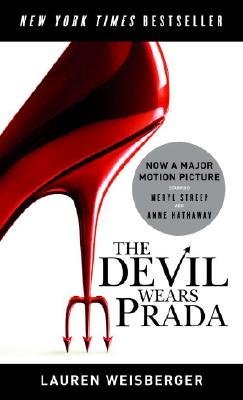
The Devil Wears Prada, by Lauren Weisberger ****

thedevilwearsThe Devil Wears Prada is a fun, light read. By now many readers will have either seen or heard of the movie, and I had too. I tend to create mental pictures of fictional characters, sometimes using actors, and other times inserting the faces of people I have known in real life. In this case, I could not imagine anyone other than Meryl Streep as Miranda Priestly, the boss from hell.

Andrea Sachs has finished college and yearns to write for a big-name magazine, preferably The New Yorker. She stumbles across the opportunity to break into the publishing world as Priestly’s assistant at Runway, a fashion magazine. This is a job with a high rate of turnover, and one can see why from the moment the position commences. There is no such thing as off-the-clock time. Sachs is on call 24-7, often for such trifling things as a gift for Priestly’s snarky twin daughters, or the ubiquitous dry cleaning. If it rains, Sachs is blamed. If a flight is late, Priestly wonders why Sachs couldn’t anticipate this problem and deal with it. Sachs is constantly demeaned and belittled, and she puts up with it because of the immense amount of power Priestly represents in her chosen field.

Sachs watches her relationships flounder as she is constantly required to break personal engagements in order to leap whenever her phone buzzes. She keeps at it knowing that at the end of a year with Priestly, her career in print journalism will either be made or broken by her boss.

The book spins an over-the-top villain at the perfect place in time. The book was published in 2007, and this was a time when the First World had just begun to realize the downside that is inherent in the brave new world of satellite-based communications. People that used to enjoy going on vacation and walking away from their telephone now take it with them, and this is often either a plainly stated part of their job, or a better-safe-than-sorry aspect of damage control. I didn’t have to do this during my twenty years as a public school teacher; so far, teachers really can carve out a part of their time away from the classroom purely for personal privacy and enjoyment. However, my husband is in the tech field, and though work didn’t phone him while he was away, he constantly checked into his work e-mail via laptop computer, insisting that it was better to know if a crisis was unfolding so he could be prepared to meet it upon his return rather than being blindsided and unprepared.

The movie version of the story develops Priestly a bit more and keeps her character from being a cardboard cutout. Unfortunately, the book doesn’t do that. But then, this is not serious literature; this is a romp.

Though many modern professionals are married to their phones and other devices all the time, Weisberger has spun a tale that will make just about anyone gratefully reflect that their own job is better than that. So like horror stories, part of the joy in reading this fluffy beach read is in comparing one’s own life favorably to that of the protagonist.

If you have a generous book-buying budget and want a fun read to pack for your beach trip or an escapist weekend at home, this one is a great choice. If your budget is tighter, try your public library; that’s where I found my copy. Unless you have a schedule like Sachs’s, you likely won’t have difficulty finishing this one by its due date.

Great beach read; fluffy escapist novel.

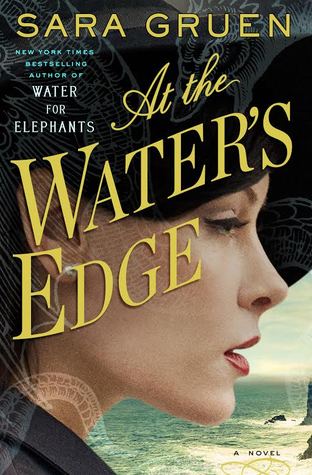
At the Water’s Edge, by Sara Gruen *****

bythewatersedgeBy the author of Water for Elephants comes a gripping tale of cowardice,deception, love, and heroism. My great thanks go to Net Galley and Random House for the DRC. It was a quick read and a great deal of fun.

The setting: World War II, primarily on a remote Scottish island. The story: three spoiled, wealthy, entitled brats misbehave publicly and are sent away by their chagrined parents. Since their allowance has been cut and they have to get gone anyway, they decide it might be just the thing to track down the Loch Ness Monster; not only will it be heaps of fun, but Father will be so pleased. He always wanted proof it existed! And what war? When one is wealthy enough, one cannot possibly be in danger! Just haul out the cash and start bribing others. Nothing to it, really!

Now we’re cooking. We’re on a remote Scottish island after endless seasickness aboard a ship that is constantly fired upon by u-boats. We have a crumbling castle; a Scottish warrior; a fainting damsel; a fiendish conspiracy; several working class heroes of both genders; a love story; and of course, there’s the loch! Get your gum boots ready; it’s soggy out there. Toss in a dash of magical realism, and we’re all set.

Gruen does a wonderful job developing Maddie Hyde, our protagonist, who receives more than one wake-up call whilst she is marooned on this island in the middle of a war that is now real and present. The treatment of husband Ellis and pal Hank is perfect; the writer is subtle, but not so subtle that we miss what’s happening. Angus is such a magnificent character that I found myself wondering what actor ought to play him when the movie comes out.

So I absolutely forbid you to regard this book as Water for Sea Monsters! No, no, no.

Gruen’s wonderful nugget will be released at the end of March 2015, just in time for spring break. If you’re going to be somewhere warm, it’s the perfect beach read. If you’ll be at home or in a cozy cabin watching the rain pound down, it’s the perfect curl-up-by-the-fire book.

Your reviewer isn’t usually fond of love stories, but for Sara Gruen, an exception will always be made. A must-read!

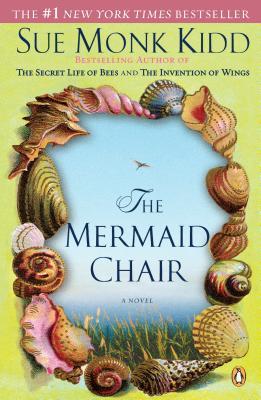
The Mermaid Chair, by Sue Monk Kidd *****

themermaidchairJessie Sullivan has a twenty-year itch. She’s stifled, confined, and irritated by her husband, Hugh, a psychiatrist whose professional knowledge makes him automatically correct in any difference of opinion. When the phone call comes telling them that her mother has deliberately chopped off her own index finger, Hugh tells Jessie to go, and once gone, she finds herself unwilling to return home.

Jessie tells Hugh she has to take care of her mother, but the truth is that she has to take care of herself. And the other truth is that she has fallen madly, deeply in love with a monk who lives at the friary next door. And it’s mutual.

Beneath the surface of her romance, old family business percolates, heats, expands. And something is about to blow.

Merely telling you the outline of the plot fails to convey the magnitude of this writer’s magic. If you have read anything else by Sue Monk Kidd, you have at least an idea of what she’s capable of. A few writers are capable of speaking to the reader as if there is no other reader; the whole thing has been written for you, and you alone. It’s deep, and it’s personal.

In my retirement years I have been devouring books the way I once did bags of chips. Sometimes a few months later I look back at the list of books I have read, and have to get online and remind myself what some of them were even about.

Yet there are others that strike a chord so deep and true that years, decades may go by and I’ll still remember them almost as if I had just read them. And this is one of those; I know it already. I actually stopped breathing a few times, I was so struck by her prose.

It’s possible that this may appeal most to middle aged women and those who are older, since that is the gender and stage of life of the protagonist. Yet in some ways such labeling is unfair, because women often read and are spellbound by novels whose chief protagonist is male, so it seems as if the reverse should be true sometimes. All I know for sure is that it really worked for me.

My copy came from the local library, but if I had paid full jacket price for this little treasure, it would have been worth every penny.

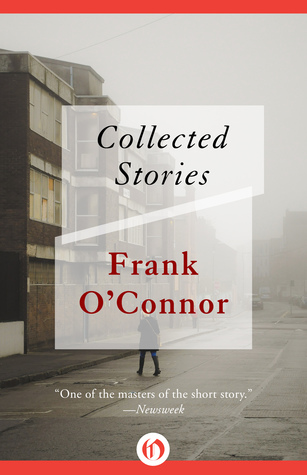
Collected Stories by Frank O’Connor *****

collectedstoriesWhat an unpretentious little book, and who would have dreamed it would be so full of first-rate short stories? Mr. O’Connor wrote from the 1930’s to the 1960’s, and may be one of the finest writers Ireland has produced, which is saying a great deal. Thank you and thank you again to Open Road Media and Net Galley for the ARC. It’s been a real joy to read!

O’Connor’s early life was marked by alcoholism and domestic violence, and he tosses these into the stewpot of his stories that is so congenial, so resonant, that we little know the pain he went through before he wrote them. The quality of the writing is consistent throughout, which is even more remarkable given its length, which clocks in at over 700 pages! At times poignant and wrenching, and at other times witty and a little naughty, though never breaching the bounds of good taste, Mr. O’Connor delivers.

His protagonists are ordinary people, all of them in Ireland. They live in small villages for the most part; some are wives and mothers, some are brave young lads; there are noble priests and those who are not as noble, but all of them are believable and create an instant bond with the reader. His overarching theme is to remind us, in his folksy, understated way, that all of us are human. He lets us know that whether we believe in God or whether we don’t, for the moment we are all each other has.

O’Connor lived through revolutionary times, and was no stranger to the Irish struggle, which is near and dear to my own heart. His famous opening story, Guest of the Nation, focuses on a card game that takes place between Republican soldiers and their prisoners. Its blend of the ordinary with the wrenching emotion that ran high at such a time makes it immortal. The soldiers’ ambivalence and humanity lends it much of its authenticity.

One of my own favorite quotes appears early in the collection in a story titled “The Luceys”, in which Charlie visits his uncle, a priest. Charlie thinks his uncle is eccentric and cannot fathom how the man thinks:

“One conversation in particular haunted him for years as showing the dangerous state of lunacy to which a man could be reduced by reading old books.”

May we all suffer similarly!

I loved the references he made to “a gang of women” outside of Mrs. Roche’s house in “The Drunkard”. I also laughed at his reference to “…the mood of disillusionment that follows Christmas”. And in “Darcy in the Land of Youth”, I liked how Mick traveled to work in England and “He found the English very queer as they were supposed to be, people with a great welcome for themselves and very little for anyone else.” Here I would hasten to add that I am descended of both Irish and English, though I tend to lay claim more to the former than the latter; Mr. O’Connor’s gift is in wryly touching upon the cultural nuances that sometimes lead to misunderstandings, and others to genuine disagreement, culture or no.

I could continue quoting marvelous passages, but I think it is better for you to ferret out some of your own, and let’s face it, if I haven’t sold you on this book right now, I never will.

Except for this one last bit, which is really a commentary on all strong short story collections: this time of year, many of us will have guests in our homes. If yours is a family that reads, you may choose to set something out in your guest room, and short stories are especially lovely for them to have, because whereas one may not finish a great thick book during a visit over the holidays, one can pick up a short story at bedtime and finish that story before turning out the light.

And the glorious thing is, guests don’t expect a book that is left for their perusal to be brand new; they can enjoy a well-thumbed book without worrying if they inadvertently crease a corner. Right now, you have the chance to get the book for yourself, finish it, and then leave it for company.

That’s a good thing to do, because in the end, all we have really is one another.

The Handsome Man’s DeLuxe Cafe, by Alexander McCall Smith *****

thehandsomemansWithin the genre of the cozy mystery, this long-running series by Alexander McCall Smith reigns supreme. The magic is as much due to the cast of engaging secondary characters as it is to Precious Ramotswe herself. The Handsome Man’s DeLuxe Cafe is no exception. It comes out October 28; thanks to the publisher and edelweiss books for the chance to read and review it.

On the very first page, Mr. JLB Matekoni entered and I smiled. I don’t mean inwardly; I mean my face broadened into the kind of contented crease that lowers our blood pressure and would, were we cats and not people, cause us to purr. I snuggled deeper into my blankets and got ready for a splendid evening. And another. And another.

Smith creates each new entry in his series by either adding a new setting to Gabarone, where our protagonist lives and works, or by bringing in new people, and often, as here, he does both. And often he sets up two different problems, one a professional challenge for the #1 Ladies Detective Agency, and another a personal crisis for someone among the regular cast of characters. Sometimes the two dovetail neatly at the end, but he doesn’t do this all the time, lest the result become formulaic and lose its magic. And in this instance, having become momentarily guarded by a silly story that was a little over the top rather than charming (the lion story), I was therefore watching to see whether the problem regarding Mma Makutsi’s cafe would be resolved within the amnesia-client’s family.

But our writer didn’t do that. And this is why the series is so successful.

One more skillful and enjoyable protocol of Smith’s is that he introduces recurring characters very briefly, and it never jars the faithful reader who has gone through the entire series into wanting to say, “Oh, come on, come on, I know this already.” Rather, he injects it naturally into the narrative so that the familiar reader will nod happily and think, ‘Oh yes, I do remember. So dear Mma Potokwane is still at it, isn’t she? And it’s true. She does have a remarkable work ethic.’

Violet is in danger of becoming too great a stereotypic anti-hero, but it hasn’t happened yet. The author could just choose to drop her, but his habit is to continually point to the common humanity of all, and it wouldn’t surprise me if Violet were to have perhaps just one decent moment before being returned to her regular place as the exception-to-basic-goodness-among-us-all. But that is conjecture.

I read 6 to 8 books at a go, and yet, having quickly absorbed this delightful mystery, I am already anticipating the next in the series. This, ultimately, is the mark of entertaining literature.

My thanks to edelweiss review copies for the opportunity to advance-read and review this delightful story.

reposting All We Had: A Novel, by Annie Weatherwax***** Comes Out Tuesday!

All We HadThis quirky, funny, poignant story had me from hello. How often have you read a really strong mother-daughter novel? The legendary Marge Piercy brought some our way, and of course Amy Tan. Does Annie Weatherwax deserve a place in such auspicious company? I think she does.
Ruth and her mother have nobody and nothing, apart from each other and whatever they can throw in the car, and most of that stuff might not actually belong to them. They sleep together on whatever flat surface is available, sometimes a nasty mattress in an unfinished basement, but they call no place home.
Sometimes it seems more that Ruth is raising her mother than the other way ‘round, and so the fur flies when her mother suddenly decides to exert authority.
Does this sound like anyone you have known? It rings true to me. I’ve known people like this, both professionally and in my personal life. A friend in social work once told me that this “type” of kid keeps it together until she is in her mid-20s and then falls apart, because she didn’t get to scream and act out as an adolescent. At least in developed Western societies, the adolescent stage is necessary to development; if a kid can’t do it at the socially acceptable time of life that most people do, she’ll do it later.
And the fact that I found myself thinking such things, making such predictions for a fictional character, proves exactly how real Ruthie and her mother became to me as I gorged on the literary feast Weatherwax has cooked up. I was notified by Net Galley that since the book was coming out August 5, it would be nice to have my review run in early August, just before its release, and so I set the galley aside when I hit 60 percent. Later, I told myself. You can read it later.
I couldn’t stand it. I have over 100 unread books, most of them used, some of them galleys with a sell-by date on them, but I dove back in mid-July, like a dieter on a chocolate binge. I’ll run this review on my blog in July and then run it again in August, because All We Had is not just any story. It’s the story that couldn’t wait.
Rejoining mother and daughter, then, we head westward. Mom is determined that come what may, Ruthie will go to college, and she has her eye on the Ivy League schools. No matter how many boyfriends she takes up with, moves Ruthie and herself in with, and then books it (sometimes with the guy’s car and almost always with some of his money), their journey continues toward New England.
That is, until they come to Fat River, Ohio, a place that proves exceptional. It is here that Ruthie becomes fast friends with Peter Pam, the transvestite waitress at the local diner. People are different here in Fat River. Nobody has a lot of money, but there is such character here, a sense of community surpassing anything they had ever believed was possible for people like themselves, and the cynical, wise-cracking, foul-mouthed Ruthie and her mom find their defenses breaking down, a bit at a time, as the town takes its hold on their hearts.
What happens from there you will have to learn by yourself. I couldn’t tear myself away. I don’t know whether this book will be a best seller, but I do know that I would have been the poorer for not having read it.
Highly recommended!

Serpents Rising, by David A. Poulsen ****

serpents risingWhat fun to get in on the first mystery novel of a planned series! Poulsen is an experienced writer, and he knows how to set the hook to reel readers in. I was immediately engaged as I read the initial chapters.

Thank you, Net Galley and Dundurn Press, for the advance peek!

I’d classify this as a cozy mystery, and it’s the first such book I’ve read that was written by a man. I enjoy a limited number of this sub-genre. I dislike seeing everyday people (housewives, caterers, hoteliers) “outsmart” the professionals, and I avoid like the plague any cozy mystery with (*shudder!*) recipes! For those, I use a cookbook. And Poulsen doesn’t do either of those annoying things listed above; so far so good.

His reason for wanting to get to the bottom of his wife’s death by arson is a strong one, not all that new, (the cops suspected him for a long time, and he misses his wife), but old devices like these can still work if the writer is skillful enough to make them seem new. In the beginning, it worked for me.

Equally if not even more engaging is the help he provides his friend Cobb, a private detective being paid to search for a missing teenager with a history of drug abuse. The characters of Jay and Zoe were almost tangible. I used to teach kids of this age, and Poulsen made them so believable that I felt as if I knew them.

That said, the first half of the book is better than the second half. Some of the details in the resolution strained credibility, and the second half also saw a couple of seen-it-many-times plot devices that didn’t look new; they made me groan and mutter, “Oh come on, not that again!”

But you’ll note there are four stars there. It’s a good book, despite the occasional momentary mutter on my part. When the second Cullen and Cobb mystery comes out, it will be on my to-read list.

I was pleased that the author did not add a sickening amount of gore, or add elements that would leave me with a leaden gut for the next two days. Some authors feel that in order to gain the attention of an increasingly easily distracted audience, they have to dig up every horrible possibility and traumatize us. Not so here (or in anything I would label “cozy”). If your “ick” factor keeps you away from Stephen King, you can read this one.

For a fun, relatively quick read to curl up with over the weekend or take to the beach, get a copy of this book. If you are a mystery fan, I think you’ll like it!