Mrs. John Doe, by Tom Savage *****

mrsjohndoeTom Savage is master of the high octane, full-speed-ahead espionage thriller. Last year he gave us Penny for the Hangman, which kept me up late at night, and this year if anything he has improved upon it with Mrs. John Doe. Thank you to Net Galley and Random House-Alibi for the DRC. Now that’s I’ve finished it, I can breathe again!

Nora Baron is a widow. Her husband Jeff has been killed in the line of duty as a CIA operative in Britain. She goes to claim his corpse, get him cremated and take him home…and then all hell breaks loose, because nothing, nothing, nothing is as it seems.

Savage’s thriller style is both fast-paced and psychological. We never know who Nora can trust, and so we are constantly on edge. Sometimes it irritates me when a writer messes with my head, but the way Savage does it just makes me want to sit up and howl for more. From one friend-who-can-help (or is it a foe-who-will-turn-on-her?) to another, we are constantly cheering for Nora, advising her (good gravy, NO, don’t get in that car!), and every time we feel we have a pretty good grip on what ‘s going on and what’s going to happen next, it turns out we couldn’t be more mistaken. Savage accomplishes all this without resorting to trickily withheld information or any of the other shabby cheats and foils that lesser authors deliver. The story arc that would, in another thriller, start to pick up past the halfway mark and really accelerate at 85%, instead picks up almost from the get-go and keeps us furiously turning the pages until after the climax, when we finally wind down just enough to know what happens to our protagonist after the ride is over.

Those that read my reviews know that I can’t so much as tie my own shoelaces without looking for political content, so I also want to mention that the anti-Pakistani slurs and assumptions that all characters from the Middle East are terrorists get taken care of tidily.

Ultimately, having the woman depicted in such a positive, capable fashion is a touch that boomer-feminists like me, as well as the younger, newer wave of feminists, will appreciate. And while once in awhile something implausible slides into the text, we have to buy the premise anyway, because Savage isn’t going to pause long enough to talk about it, and we have to know what happens next. So as usual, an excellent writer can make us believe almost anything, whereas an indifferent one can’t make us bond with the everyday and the ordinary.

When this thriller comes out October 6, get a copy and hold on tight. It’s going to be one frenzied, wild ride!

Black-Eyed Susans, by Julia Heaberlin ****

BlackEyedSusansTessa is the sole survivor of a group of young women who were left for dead in a mass grave, which was then planted with flowers. The Black-Eyed Susans became a metaphor for the trauma she experienced. This thriller, Heaberlin’s first following a highly respected career in journalism, is a great read with a few problems, most of which have to do with trying to cram too many details into a single novel. It was looking like 3.5 stars to me until it passed the halfway mark; then it hit its stride. Ultimately, the eloquent manner in which issues surrounding the death penalty were braided into the narrative won the final .5 star from this reviewer. And at this point, I have an obligation to tell you I read the book free, and to say thank you to Net Galley and Random House Ballantine for the DRC. The book will be available to the public August 11.

Tessa is an adult, a single parent, and it’s been twenty years since her abduction and attempted murder. There are memories she tries to bury, and there are other niggling details that she can’t make sense of. In a writing style somewhat reminiscent of Jodi Picoult, Heaberlin flashes us back and forth from Tessa’s adolescent memories to the present, a life in which her sole objective at first is to protect her own teenage daughter, Charlie, whom she is afraid may pay the ultimate price. Because Tessa’s stalker has been planting Black-Eyed Susans in her yard and various other places, and she is scared half to death.
Strange, threatening packages appear in the mail. And her best friend Lydia disappeared mysteriously not long after the trial. There are so many shadows, so many possible threats out there that her inclination is to retreat into her artist’s studio, and into her home. Don’t rock the boat.

The problem is that an innocent man is about to become one more victim of Texas’s capital punishment. Her supposed attacker, the supposed killer of the other Susans, waits on death row…and the clock is ticking. She knows he didn’t do it, and she’s been holding out. Once she decides to testify to his innocence, will she be believed? Can she get there in time?

A tremendous amount of research went into teenage trauma and its possible affects, and the capital punishment process (and the process of its defense) in Texas. Heaberlin has done her homework; if anything, she may have done a little too much, or tried to incorporate too much of her work into one novel. Somewhere around the 37 percent mark, I found myself not mystified, but confused. What were all these references to the OJ Simpson trial doing here? Who the hell is Jo? Is Lydia dead, moved away, or what? The suspense fell away while I stopped reading in irritation to go back over the book and try to discern what I had missed or forgotten.

However, just before the halfway mark, the author found her stride and everything came together. From that point till ninety percent, I was riveted. Portions of the text approached the level of literary fiction. I found myself questioning my earlier complaints, and went back and reread the passages I had marked earlier to see whether I had just been distracted, or in a snarky frame of mind. But no, the inconsistency is really there.

The supernatural bits about the other Susans being in her head, talking beyond the grave, may have turned up in the author’s research as a possible outcome of trauma, but they felt extraneous to me, as if they had been shoe-horned into the text. If I had been her editor, I would have cut them.

I was not entirely happy with the ending, which felt a bit contrived, but I was so deeply satisfied by what I had read up to that point that I didn’t feel let down.

My advice to the reader is this: if you are opposed to the death penalty and love a good thriller, get a copy of this novel. I think you’ll find it as satisfying as I did. You may want to flag pages where you have questions with sticky notes, or mark it digitally if you read it that way; later on it will all make sense.

And whatever you do, remember: there are no millionaires on death row. Not in Texas, and not in any other state that has capital punishment in the USA.

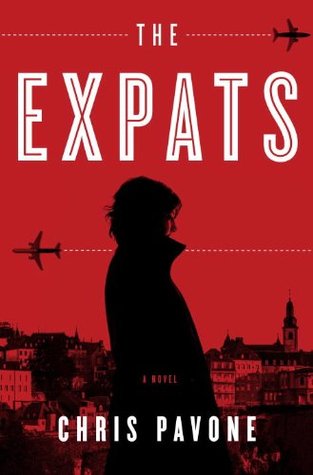
The Expats, by Chris Pavone *****

theexpatsChris Pavone spins one fine espionage thriller. I was introduced to his work when I read a galley of The Accident, the white-knuckle suspense story that follows this one. I was sufficiently impressed that I checked to see what else he had written. This first effort, which I borrowed from the Seattle Public Library, earned him the Edgar Award and a number of other kudos also. It’s a real page-turner.

Katherine is a mother of two young boys, and although her husband doesn’t know it, she works for the CIA; she has told him she is a government employee, and that she sits around all day writing position papers. She never inquires too closely into the life he led before he met her because she is afraid of the quid pro quo that must surely follow such questioning. The consequence is that she has been married for years to a man she doesn’t really know all that well. But he and the boys are really all she has; she has no other family to speak of.

She’s sitting on a mountain of unspoken experience. She has killed more people than she cares to remember. The reader is fed tiny shards of her memories in gradually increasing tidbits, and it is very effective in building toward the conclusion.

Her spouse Dexter, meanwhile, springs the surprise on her one evening: his work requires him to move from Washington D.C. to the tiny European secret-banking center Luxembourg. He works in I.T. in the banking industry as a security consultant, preventing hackers from thieving the bank’s massive resources. That’s what he tells her, anyway.

Relieved in a way, Katherine quits her job. The CIA doesn’t lift her cover, but they let her go little by little. Now she can finally focus on her sons, on her home, on her marriage…and so she sets up housekeeping in Luxembourg, enrolls the boys in school, enrolls herself in cooking classes during the day…and is bored out of her mind.

It was easy to buy the scenario as Pavone presents it, because it all figures. Who would join the CIA but a real adrenaline junkie? And what woman that has stalked other people, killed people, dodged those that stalked her or that sought retribution…what woman in such circumstances would not be bored out of her mind by cooking classes and shopping for area rugs and shower caddies?

It isn’t made easier by the fact that Dexter is always at work; that’s what he says, anyway. He is at work, on the road, in a meeting all the goddamn time. He spends an awful lot of time with Bill, another American expatriate, whose wife Julia seems a little too friendly to be true.

So is she merely acting like a CIA employee, governed by auto-suspicion? Or are these people setting off her spook-dar for a more substantial reason? And just what the hell is really up with Dexter? You would think the guy could show up for Thanksgiving dinner, for heaven’s sake!

If you have never read anything by Pavone, read this book first, and if you like it as much as I did, get The Accident second. Each is a stand-alone novel; they aren’t a series or sequential. But the second book is just a tiny bit better than this one, and I found myself slightly let down by an ending that seemed slightly too tidy. And in truth, I don’t think I’d have felt that way if I hadn’t already read something of his that is even better. In other words, judged against other thrillers written by other writers, this one is a sure-fire five star novel. Judged against Pavone’s subsequent work, the score shrinks a tiny bit.

The best part of all may have been the afterword. I always wondered about the research that went into writing spy thrillers. How the hell does anyone find out anything about the CIA, unless they are employed there and sworn not to tell? And Pavone tells us how he did it: he made it up. And that’s why it’s called fiction.

Guaranteed to absorb your attention for a long weekend and make all your own troubles look small.

The Boyfriend, by Thomas Perry ****

TheboyfriendThree and a half stars, rounded up.

I’ve been a fan of Thomas Perry’s for decades. In the past, he has written such adrenaline-coursing thrillers that I’ve actually had to put his novel down in order to calm down and breathe normally for a moment. And while The Boyfriend is an interesting story, it doesn’t measure up to the body of work I associate with this writer.

Here is the premise: we have two protagonists, a good guy and a bad guy. Our bad guy is a hit man and a serial killer. At first I really liked the author’s work here. It’s a twist I hadn’t seen before. The bad guy is hired by clients from Latin America who he hypothesizes are perhaps having him take out individuals who are also from Latin America, but who fly north to assist Washington D.C. in its attempt to take those cartels apart. He doesn’t really know, though. He was recruited by an American who also worked for them, and who became his partner. The partner was killed by one of the targets, and now our hit man, who takes a variety of names throughout the book, is a one-man killing squad. He makes a lot of money, but needs to stay below the radar and be impossible to track. The women he kills are escorts that he persuades to trust him. He behaves like the opposite of a typical john, nonthreatening, considerate, and gets them to invite him to live with them. Voila, free lodgings where the Feds won’t be looking for him. And each time he leaves, he kills his hostess in order to avoid leaving a witness behind, even though they have no idea he is a killer. The dead men he has assassinated cause a lot more flash and ruckus, so the death of a high-priced hooker doesn’t get much air time on the news or much attention from police.

I had a little trouble buying this scenario, but the author also draws out a story from the killer’s youth that shows that in shopping for an escort wherever he is staying, the man subconsciously looks for the same woman over and over again. They look alike. Again and again, he finds and kills this woman. Taken from that sort of perspective, I could buy the premise. But this part of the premise falls apart halfway through the novel with a one-sentence explanation that left me scratching my head. What the hell?

Our second protagonist, of course, is the guy who is tracking the killer. He Needs to Find Him Before He Can Kill Again. Jack Till is our good guy. Till is a private detective working for the parents of one of the escorts. They loved their daughter; they have money; they want their daughter’s killer found and brought to justice.

Till uses the internet to track where he believes the killer will go next. The clues he uses at first are believable, and the story line, if not gripping, is interesting. But I had real problems buying into the amount of wealth he was able to expend in order to not only travel all over hell and back, but in buying breathtakingly expensive gadgets to assist him:

“He drove into Boston and bought several items: a night vision scope, a sixty-power spotting scope, and a plug-in microphone that he could listen to by telephone.”

We don’t have a sense that Catherine Hamilton’s parents are members of that bottomless, one-percent, ruling rich. They give him 100k and tell him to let them know when he needs more, but for all we know, they could be looting their retirement accounts or double-mortgaging their home. It’s believable that grieving parents would do these things. But multiple plane tickets, hotels, and expenses like the ones in the quote above (not his only stop, not his only purchases) gave me pause.

In addition, I wondered at the blithe assumption that a store, even in a major metropolis such as Boston, would have these items sitting under glass ready to be sold. Wouldn’t some of these items have to be special-ordered? That’s expensive, very specialized stock. But I will admit I don’t know a lot about firearms or spying devices; it just felt like a stretch to me.

If you are concerned about spoilers, by the way, I have confined myself to the first twenty percent of the story. Most of it is not in this review.

But I am thinking back now to the series that hooked me and a lot of other readers, when Perry was a relatively new writer. This man wrote the Jane Whitefield novels, stories about a modern-day Seneca Indian woman who uses the skills of her culture to cover the trail of endangered individuals. The series was absolutely riveting, but the nature of her work also kept it from being a more or less permanent series. Each time she did her good deed, she was that much closer to being discovered and murdered. Perry had to close that series off and write some other things, and he came up with a number of other really strong novels, some of them on par with that beloved series. And because of his sterling track record as one of the best thriller writers out there, I came to this novel with higher-than-usual expectations.

The Boyfriend holds together really well in places, and is a little clunky in others. I was lucky enough to read a free copy, not as an ARC, but as a library book brought home for me by a thoughtful family member. As such, I enjoyed it, even though I was a trifle disappointed. But at the same time, I was glad I had been able to knock it off my Christmas wish list, because there are many things I would rather unwrap than this book.

My advice to you, reader, is similar. If you find this book lying on a table of 99 cent paperbacks, or if you can read it free from the library or borrow it from someone, give it a try. See what you think. If you are new to Perry’s work, you can read it free of the high expectations I brought with me when I read it.

But don’t toss the full jacket price on the counter unless you have a budget as generous as Jack Till’s.

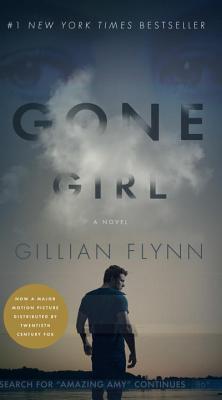
Gone Girl, by Gillian Flynn ****

gonegirlGone Girl is famous and has had numerous awards heaped on it, made its way to the top of best seller lists, and been lauded by reviewers far more widely read than I am. Rightly so. It’s one hell of a story, and just when I thought perhaps I saw what was happening, I would find that I had merely played into the writer’s clever trap, and that the roller coaster was about to go around a bend or through a tunnel entirely unexpectedly.

Since so many others have reviewed it before me, and since I did not read the book as an ARC, I’m going to approach it in a slightly different way than usual. I want to look at how this story reflects today’s society, because that part of it jumped out at me, grabbed me by the hair and told me that these are tense times, and they aren’t improving any, not right now. And how we deal with certain issues in fiction is perhaps not as well partitioned off from real life as we might prefer to believe.

The assumptions inherent in my definition of “society” are that we are looking at the English-speaking world, and my own experience is limited to North American English-speaking society. I can’t really speak for what lies elsewhere, since the media often distorts the real picture, and I haven’t gone anywhere.

Two things jumped out at me, and one of them is something that is popping up in literature all over the place now. It’s like playing whack-a-mole: there it is! Whoa, there’s another example! And another! And another! Here’s what I see in this book, and all over the place: the police can’t help you. Or they won’t. In many situations they are equal parts disinterested in exacting real justice, and perfectly happy to do what seems easiest and most likely to complete their task with the least exertion and unhappy attention from their superiors. And not only are you not going to get help from the cops, but that means it’s okay to just go take care of it, using whatever means you deem necessary. That’s point number one of two.

So when Amy gets gone from home in a small Missouri town, the local cops do a serviceable job and look at all the possibilities. They aren’t crooked or brutal as often happens in large cities, but they also lack imagination. Our male protagonist does not really trust them very long.

I don’t mean to belabor the point, but it does bear examining, this trend in contemporary fiction. During the 1950’s, 60’s, even the 1970’s, the police, when depicted in fiction and in film, were 99 percent of the time really decent and extremely clever. They put in extra hours of their own time, went sleepless, and let their personal lives deteriorate because Catching the Real Killer consumed them. But they succeeded, in the end, and the reader (or the viewer) fully expected that to happen. They did it all within the letter of the law, because that was what good guys did. It was fiction, of course, but we believed it.

These days I read story after story, from funny capers like the Stephanie Plum series, to any number of gritty urban tales (you can probably think of half a dozen without trying too hard, if you read a lot of crime thrillers and mysteries) in which someone else has to step in and take care of the job because the cops are not up to the task. These cops aren’t always bad guys; sometimes they are underfunded, understaffed, or just plain dumb as a box of rocks. But it is the vigilante (the word is seldom used; it’s not a nice word, but it’s accurate) who will ultimately solve the crime. Sometimes there are variations, like some of James Lee Burke’s more recent work, in which a rogue cop of sorts gets sick of the rule book and goes off on “vacation” time in order to do the things that cannot be done on the clock.

The oldest story in the book is the I-have-to-solve-the-crime-cause-I’ve-been-framed plot line, although a writer who is fresh and original can still sing that same old song and make it seem brand new, not unlike the-killer-has-got-my-loved-one as a vigilante motivator.

Here’s the part that I hate and try not to think about too often, but because I see it recurring so much right now, I feel as if I have to mention it: in well-written novels such as this one, I just love it when someone who is not a cop takes matters into his or her own hands and metes out justice. That’s not sarcasm. A good writer can sell it to me and make me enjoy it, and I will look for more of that writer’s work. Because I can tell myself it’s just fiction.

In real life, when some frustrated unemployed neighbor takes to stalking the local teens to try to catch them doing something illegal; when Stand Your Ground laws enable some insecure, bumbling ass to follow young Black men around till he’s had the satisfaction of shooting one dead, once he has sufficiently goaded the man into taking a swing at him; it’s absolutely nightmarish.

One could argue that this is what fiction is for; it gives us the chance to see wrong things done right, if only subliminally. But it disturbs me that it has become so popular, and even more so that it has become thrilling to me personally. It can’t be a good sign.

I should end this here because it’s plenty to think about, but I need to talk about the equally disturbing issue number two . In Gone Girl, there are some really amazing, excellent feminist mini-manifestoes squeezed in between the many damning things that our bad-girl protagonist says and does. Again, I find myself bothered that we can’t see a strong, wonderful woman who notes that “I like strong women” is usually said by a man who hates strong women; that expecting one’s husband to tell her why he was out all night is deemed ‘shrill fishwife’ behavior that will destroy a marriage (because goodness knows, the marriage can’t fail over a guy who can’t find his phone or his front door at night.)

In this harrowing so-called era of post-feminism, when the states are shooting down women’s right to control their own bodies with abortion laws that are so restrictive as to be either very expensive or impossible, and ‘personhood’ amendments (which I was happy to see fail) that order the woman to honor a garbanzo-bean shaped spot of tissue and blood more than she values herself, her family, and her future, why oh why must the character who issues some genuinely truthful and brilliant statements regarding the worth of a woman also be a conniving, manipulative, narcissistic monster? With domestic violence not in abeyance and the word “bitch-slap” being considered only slightly edgy when included in a joke, why can we not have real heroes who are strong women—not slinky, young femme fatales who use their bodies as bait, but women who use their brains and social skills to get at the truth?

If I sound like it haunts me, it’s because it does.

If you want to know the standard book review information about story arc, character development, and setting, go and read what the New York Times had to say, or better still, go look at the string of awards garnered by this novel. It’s very strong writing, and of course it is not (as far as I can see) intended to make a political point.

On the other hand, people that live in war-torn nations will tell you everything is political. At dinner time, who eats and who doesn’t, that is political. Who lies, and who tells the truth; who can see a doctor and who can’t; these are every day issues that are also massively political.

As for me, I frowned and flagged the pages when I saw these hot buttons pop up, but I kept turning the pages, because I wanted to see how the story would end. And it’s a great book, sure to keep you up way past your bedtime if you aren’t careful.

But there is no ducking the fact that it is also a product of the time in which we live. Let us come up for air from time to time, and view things as they are, lest we get sucked into the oily abyss of socially sick ideas without even realizing we’ve been had.

A Spy Among Friends: Kim Philby and the Great Betrayal, by Ben Macintyre *****

Recently released; reblogging!

seattlebookmama's avatarSeattle Book Mama

A Spy Among Us Kim Philby     This was a real page-turner, which says a lot, given that I already knew how it would end. I read the historical fiction version by another author and was fascinated by it, but also wondered what was fact and what was invented. Macintyre take his job so seriously that 25% of the book is citations. You KNOW he’s not making this up!

A great big thank you goes to Net Galley and Crown Publishers for the free read; that said, yes, this one is worth buying. I haven’t read anything else by Macintyre, but now that I have seen what he can do, he’ll be on my to-read list!

Kim Philby is considered by many to have been the world’s greatest spy. Perhaps the phrase should be “best known spy”, since the best spies are never found out. But that’s a digression. The fact is that this British-born, upper-class…

View original post 390 more words

Somebody Owes Me Money! by Donald Westlake *****

 somebodyowesme Imagine that you are a working class guy, okay, not always technically LEGAL work, and you place a small bet on a fairly frequent basis with a friend who is also a bookie. And week after week, just as with lottery tickets, it is money down the drain.

Then suddenly, the angels sing: Hallelujah! Your horse just won on some VERY long odds! You trot joyfully up the stairs to your bookie’s flat…and he’s there. Dead. On the floor. It looks like a professional hit.

So…what would you do?

If it was me, I know what I’d do! I’d run like hell! NEVER MET the guy. But not our protagonist. (And this is all right there at the start, mind; I haven’t spoiled a thing beyond the very beginning of the book). OUR protagonist is thinking of just one thing: he has FINALLY won a bet, and he is GOING to collect! So, whoever took this guy out must be the one who owes him money now, RIGHT? Well, where is he?

Westlake has made me laugh many, many times. I will miss him terribly, and am glad he wrote so much. I felt at least one of his novels should be on this list.

The Yankee Club, by Michael Murphy ****

theyankeeclubMichael Murphy has created an entertaining read that may keep you up past your bedtime as the end approaches. I was fortunate enough to get a chance to read it early via his publishers and Net Galley.

The premise is that Jake, a former PI turned mystery writer, has been living in Florida, having fled there heartbroken after his romance with the lovely Laura ended. Now he is back in New York. Laura is a famous actress, engaged to a very wealthy man, but Jake has not come back for her; he has returned because his former partner, Mickey, has been murdered.

During the first 25% of this novel, my attention wandered. This is unusual for me, and of course not a good sign. I went back over the writing to try to diagnose why this happened, since there was no obvious problem in his plotting, setting, or character development. Finally I decided that the pace was a little slow because so much attention had been given to scene setting and the introduction of peripheral characters (who would later be very important). My advice to any reader who enjoys detective fiction is to hang in there, if you find this happening to you, because it does pick up and becomes much more engaging once the story begins to roll forward.

There is a plethora of bad guys, surprises and betrayals at every turn. Jake proves to be as tough as Sam Spade, and he is ready to give his all to protect the woman he loves, though as it turns out, she is hardly a damsel in distress; I won’t say more lest I ruin it for the reader.

If I had one piece of advice to offer this writer, it would be to use a little more subtlety. Don’t tell us how your character feels, and in particular, don’t do so repeatedly. Show us in action and dialogue. If these things are handled effectively enough, it won’t be necessary to tell us who feels what and why.

Small details I particularly enjoyed: the florist’s truck, and toward the end, the bicycle.

One thing I didn’t enjoy and didn’t need, though hardly the writer’s fault: a message repeatedly popping up on my kindle telling me that I had something on my tablet that had not been purchased at amazon, and if they were in error and it had been something of theirs, I should restart my kindle and pull it out of the archives. I blew past this message 3 times; once they totally removed my view of the text and put the home page back up. Did I mention that this was irritating, especially since Net Galley does offer the option of sending the galley straight to kindle, which is how mine got there?

Thanks for permitting this rant to interrupt my review. All told, this is a really fun story once the scene has been set and action is underway. You won’t be disappointed.

Shadow Woman, by Thomas Perry *****

Shadow Woman is an adrenaline rush from the first chapter till the book ends. It builds with such a pounding intensity that you would think it was your own life that was at stake rather than that of the guy in the book.

Jane Whitefield is a character who uses her Seneca roots to help cover the trails of hunted humans. She helps them develop completely new identities as a do-it-yourself witness protection program. Under her helpful wing, others flee and get a second shot at a life that will precipitately end if the thread of their previous deeds is traced back to them.

Whitefield puts herself in danger as well, every time she intercedes for someone else. As a matter of conscience, she steps in where the more self-absorbed or cynical would shake their heads and close the door.

I have a friend who can’t stand the pace of this series. If you have recently lost a loved one and are still tender around the edges, this might be something you should pass up, or else save for later.

For those who like a novel to pick them up by their shirt front and shake the shit out of them until the story is ready to conclude, get this book right away. It is exactly what you’re looking for!

Holy War, by Mike Bond *****

holywarThat was the best horrible story I ever read. Holy War is set in Lebanon during the civil war. There are three protagonists whose stories and points of view interweave throughout this complex, highly literate novel. The plot centers on these individuals, each with one or more relationships whose ruin runs parallel to the destruction and chaos of Lebanon by various opposing forces (with the author’s emphasis on the religious disparity as opposed to the political differences, and indeed it’s a pretty fine distinction to make in this case). I requested the book from Net Galley because I haven’t read anything set in Lebanon. I am aware of the tendency of US citizens to focus over-much on our own enormous nation, and since I haven’t had the opportunity to travel beyond North America physically, I make a point to read contemporary novels set in other places. In this case, it paid off. I learned a good deal. I had never regarded Beirut as having once been a thriving cosmopolitan city; all I’d ever heard on the daily news in past years was “war-torn”. I live in a city that’s so scenic it’s nearly magical, and I am hard to impress when I travel. I have never thought of Beirut as having been lovely, but the writer describes it as breathtakingly beautiful, and the descriptions that he inserts into the story, without breaking stride in his pacing, convince me that it is much more than just some arid chunk of rock and sand. Bond makes the reader want to weep for Lebanon, and for the characters whose lives are coming undone as they attempt to do the right thing; this is considered different, naturally, by each of the protagonists. During the first third of the book, I was distracted by trying to figure out the writer’s political line. He doesn’t really have one, though, apart from the wish that this beleaguered place might have peace. I also initially wondered why all the sex and relationship material was jammed into what is otherwise essentially a thriller; then I began to see the parallels (although I could really, really live without ever seeing the “c” word applied to women’s anatomy ever again). In the end, inevitably, the protagonists find themselves in the same place together after having missed each other by mere inches at times throughout the story line. I won’t tell you how that plays out; you’ll have to see it for yourself. By the story’s end, though, each of the main characters seemed so utterly lost and hopeless to me that I found myself rooting for the dog, which was supposed to be peripheral. I engaged enough with Bond’s novel that I had to go look at a world map (and happily, we have one on the wall in our hallway) to see where exactly Lebanon is located. As it happens, Israel is smack in the center between Lebanon and Palestine; hence the struggle of the Lebanese Palestinians. I also found myself wondering why Britain (one protagonist‘s homeland) and France (another’s) feel they have any right to determine what happens here. There is no American protagonist, and yet I know the USA hasn’t exactly kept its hands off or its voice silent, either. But Lebanon is a tiny, tiny place, dwarfed by Syria, and practically a fly on the wall in contrast to Saudi Arabia. So why are all the big dogs interested in this tiny place? Are the Americans looking for a military base to replace the one they lost in Iran when Reza Pahlavi was chased away by the Iranian people? Or is there money involved? (At one place fairly early in Bond’s plot, a character says that wherever there is a war, profit is driving it, and I agree.) A trip to Wikipedia tells me that there’s oil in the Mediterranean. Hypothetically, then, the whole thing should be left to the countries that border the Mediterranean, but it would be naïve to believe it could shake out that way. And just as the great cedar forests of Lebanon have been razed for the betterment of Europe, one wonders just what shape the Mediterranean will be in once the next great oil disaster occurs there. Of course, you can read this book without examining all of those questions. It’s a fine read right on the surface level, but you’ll need a strong literacy level and full attention for it, regardless. This is not a beach read. It’s serious stuff. For those who enjoy a good thriller or have an interest in Beirut, you should get this book as soon as you can.