
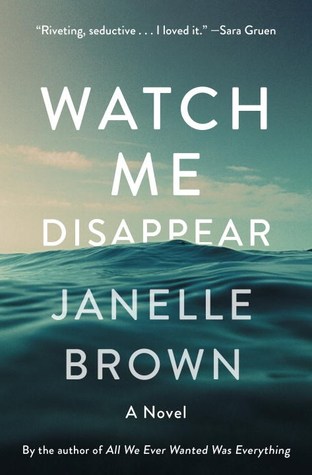
Watch Me Disappear, by Janelle Brown*****

WatchMeDisappear“…how can you ever really know the truth about another person? We all write our own narratives about the people we know and love…”

Billie Flanagan is living the good life in Northern California. Her husband, Jonathan, has a lucrative career that permits her to stay home, even though Olive is now in middle school. But one day she heads out on one of her favorite hiking trails, the Pacific Crest Trail in Desolation Wilderness, and she never returns. Search and Rescue crews find a single hiking boot and a cell phone far below the trail with its screen smashed. Her bank cards and checking remain untouched. Jonathan and Olive are forced to face the truth: Billie is never coming home again. They hold the funeral, and a year later, Jonathan sits down to write a memoir of his life with Billie. It is here that we join the family.

Many thanks go to Net Galley and Random House for the invitation to read and review in exchange for this honest review. The book will be available to the public July 11, 2107.

This psychological thriller starts with daughter Olive, who is in middle school, seldom a proud or happy time for any of us. But one day Billie appears to Olive in the hallway and tells her that she should be looking harder; she isn’t trying. Olive is convinced that her mother is still alive and trying to reach her. Eventually Jonathan starts to wonder as well. Neither of them is able to move on effectively without knowing the truth, yet there it is: they have no body and they have no proof of anything. As their journeys unfold, both externally and internally, Brown develops the hell out of both of these characters and through the memories both evoke in word and thought, she develops Billie best of all. An interesting side character named Harmony rounds things out nicely.

As each layer of each character is revealed—I was planning to say it’s like having three sets of Russian nesting dolls, but that’s not right; each has many more layers than that, more like onions–the reader’s viewpoint is forced to shift from one point of view to another, and so we wonder at various times about alternate possibilities. Could Billie really be alive somewhere? Did she just up and fucking leave them? She’s done that before. She is a runner. She has been known to drop people with no warning at all, just ghost them. It was a long time ago, but it’s true.

Or is she dead at the hands of…hmm, the ex-boyfriend that surfaces at the funeral? And we wonder whether maybe Jonathan, whose memories of Billie are not all as rosy as the ones we hear at the outset, did something to harm her. And then we wonder about Billie’s friend Harmony, who moves into Jonathan’s life rapidly enough to disturb Olive considerably. She’s so needy, so hungry for his attention; would she have offed Billie in order to have a crack at him? Many of these ideas are merely hinted at rather than voiced by the narrative, and this is part of what makes it so tasty. At first, I think my idea is original because I am so smart, but then I look back, as a reviewer has to do, and I can see it’s not really about my being smart (darn), but rather about very subtle foreshadowing. Brown uses lights and mirrors to get our minds moving in different directions, and the disorientation is, in its own twisted way, part of the rush.

A last note goes to the tangential but rarely-seen moment when a character muses about why it’s so hard to find an abortion clinic when you need one. This is the reverse side of a pet peeve of mine, the commonly used notion that every accidental pregnancy necessarily must end in childbirth, as if the year were 1950 or 1960 rather than the 21st century. I wonder whether Brown had to fight to keep that reference in her novel? One way or the other, this was going to be a five star review, but when I found that courageous little nugget, I wanted to shout for joy!

As to the end…I can’t tell you what happens of course, but I will tell you that this doesn’t end ambiguously. By the conclusion, the reader knows what happened to Billie.

When all is said and done, this is fiction that every feminist can embrace. If there is a heaven, Charlotte Perkins Gilman is looking down, and she is cheering.
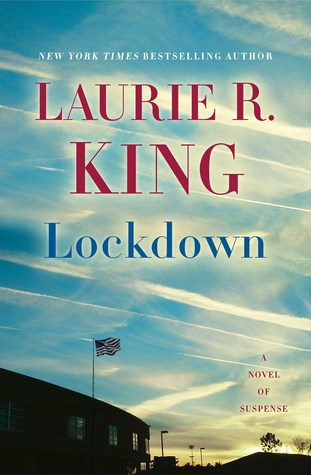
Lockdown, by Laurie R. King*****

lockdownI am a big fan of Laurie R. King’s contemporary thrillers, and this one is no exception. Thank you to Net Galley and Random House Ballantine for the DRC, which I read free and early in exchange for this honest review. It’s for sale today, so now everyone can read it.
King’s feminist fiction is made more delicious by her careful attention to detail. There is NEVER a single moment in which the setting—which is primarily at Guadalupe Middle School—slips and shows the reader that the Great and Powerful Oz is really just a human behind a curtain. Her magic never falters. Every fine detail regarding school schedules, culture, and protocol is true to life. This reviewer spent a couple of decades teaching in a middle school not much different from King’s fictional one, and I have never seen any novelist get everything so completely right in using school as the main setting.

As the cover suggests, this story is centered around a school shooting in California that takes place on career day. This is ticklish business to say the very least, one that authors dared not approach for a long time. Now, with Columbine significantly in our rear-view mirror but with school shootings an increasing, ever-present concern, King works it like a pro. A large measure of her success has to do with the way she builds her characters. We have a complex blend, from the school administrator, Linda McDonald; to her spouse Gordon, who has secrets that must not be revealed; to Tio, the custodian, another man that holds his cards closely; to the kids, the kids, the kids. We have Mina, the perfect student who has worries all her own, to Chaco—my personal favorite—to a host of others. By the time we reach the climax, we feel as if we know each one of these people, and so it isn’t a story of violence in the broad sense, but the fates of real people that collide.

This white-knuckle read treats issues of class, ethnicity and gender with the sensitivity one might expect from a master of the genre.  When I finish, it is replete with the satisfaction I receive at the end of Thanksgiving dinner—but this feast is one I don’t have to cook up myself, which makes it all the better. I’ve read 11 other books, mostly galleys, since I read Lockdown, and yet in my memory this one stands out as exceptionally strong fiction, the kind of book one wants to read a second time. And I know that when I do, some things will leap out from the pages brand new, because such a layered, intricate story is full of delightful niches and crannies that aren’t necessarily seen the first time through.

I wholeheartedly recommend this story to good people that love novels of suspense.  If it means you have to pay full freight—do it anyway. I would have.

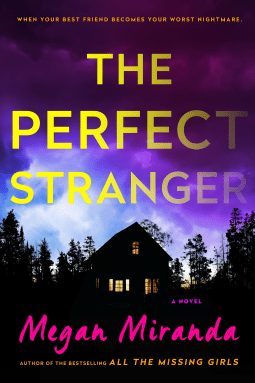
The Perfect Stranger, by Megan Miranda*****

“To get blood out, you’d have to do a deep clean. With bleach.”

the-perfectstranger

Fans of Miranda’s may rejoice, and those that haven’t read her work will have to start now. This riveting psychological thriller may leave you jumping at strange noises and sleeping with the lights burning, but oh, it will be worth it! I read this book free and in advance, thanks to an invitation from Net Galley and Simon and Schuster, but it’s available to the public Tuesday, May 16, 2017, and you won’t want to miss it. It’s the perfect story for the time in which we live, with alienation, deception, fear, and misplaced trust looming large.

Leah Stevens has some boundary issues, and it’s lost her a position in journalism. Disgraced, she decides to leave town and start over in the Pennsylvania countryside. She gets a teaching job there. A former roommate, Emmy Grey, surfaces just in time to go along with her and split the rent on a house in the woods. It’s a terrific house, but there are noises at night.

Leah says there are cats under there, scratching, scratching.

They have hardly settled in before things start to go amiss. Strange events occur that leave her frightened. When the woman’s body is dredged from the lake, Leah realizes it’s been awhile since she has seen Emmy. They work different hours, but still…shouldn’t she have seen her by now? She’s late with her share of the rent.

Leah feels as if someone is watching her at night through the glass doors at the front of the house.

This spine-tingling journey keeps me guessing every step of the way. Every time I think I see a formula starting to unspool, Miranda does something different, something I didn’t see coming. And as Leah trusts her instincts to protect her, we see for ourselves just how bad her instincts really are. Ultimately, she decides to get out of the house and ends up at the end of the road, at “the last no-tell motel”.

The plot here is taut and original, but the success of the story hinges on character. Leah’s past transgressions are vague at the outset, and we readers can tell it’s a dark time that she doesn’t like to talk about. But as the lies and the layers of deceit are peeled away one by one, we realize just how poor her sense of boundaries really is. Leah is so believable that she’s almost corporeal; I want to grab her by the wrist, haul her into the kitchen and talk to her, but even if I were able to do that, she wouldn’t listen to me.  Her personality is divided, part savvy journalist, objective and focused; half overly trusting, vulnerable waif. Her capacity for self-preservation is more limited than she knows. Is she going to make it out of this thing in one piece?

I can’t say more or I’ll ruin it for you, but this is the book you’re looking for, whether you are going to the beach or just need time to escape right here at home.

Just be sure to toss a blanket over those big glass doors before you settle in to read. Trust me.

The Twelve Lives of Samuel Hawley, by Hannah Tinti*****

thetwelvelivesofs “Everything breaks if you hit it hard enough.”

What would you do to protect those you love the most? Tinti’s epic father-daughter tale has already drawn accolades far and wide. What can I add to it all? There are only so many ways to say that someone is a genius and that her work deserves the highest praise and honors. I received my copy free and in advance, courtesy of Net Galley and Random House, in exchange for this honest review, and I’ve spent the last month trying to decide what I can add to the discussion. Although 2017 is clearly an outstanding year for literature, this title stands head and shoulders above everything else I’ve seen. It will likely be the best fiction published this year.

Our two protagonists are Samuel Hawley and his daughter, Loo. The story is arranged with alternate points of view, and also moves from present tense to the past, when Lily, Loo’s mother, was alive. Hawley is a career criminal, a man that has robbed and killed as part of a business transaction, but his tenderness for his daughter and his wife keep us connected to him.

As a parent, though, Hawley is kind of a mess. He does his best, teaching his daughter useful tasks like how to file the serial number off of a weapon and how to use it, but at the same time, he keeps his criminal business quiet and low, and she is nearly grown before she realizes what he actually does for a living. The two of them move around the country frequently, and they have a routine that gets them gone in a hurry when it’s necessary, but as she gets older he takes her to the Massachusetts town where her maternal grandmother lives. And I have to say, Mabel Ridge, Lily’s mother, is one of the most arresting side characters I have seen in a very long time.

For Loo’s sake, Hawley works as a fisherman and sets down roots. His participation in the Greasy Pole event, a cherished local tradition, wins him a place in the community. But he’s left enemies in his wake, and Hawley is constantly alert to the threat others pose. Who’s in prison, and who’s out? Who’s alive, and who isn’t anymore? Sooner or later, someone he doesn’t want to see is bound to rock the life he has established for himself and his daughter.

This is the sort of literary fiction that lets the reader forget that it’s art, because it reads a lot like a thriller. There are scenes that are laugh-out-loud funny; my favorite involves a car thief named Charlie.

Samuel Hawley seems to me to be a character for our time. Fifty years ago, a novel like this would have been controversial—and it may still be, who knows? Great literature often is. But today with the stratospheric growth of the American prison population, many more members of the book buying public either have done time, know someone that has, or know someone that barely escaped having to do so. It’s no longer unthinkable that a person that has done some truly reprehensible things, may also be a human being.

One way or the other, you have to read this book. The buzz it’s created is only the beginning. If you read one novel this year, let this be it. It’s available now.

Every Dead Thing, by John Connolly****

everydeadthing“Our ancestors were not wrong in their superstitions; there is reason to fear the dark.”

This is the first entry of the Charlie Parker series, and I recently read and reviewed the newest one, so it is interesting to go back and see how the series begins. Thank you to Net Galley and Atria Books for the DRC, which I read free in exchange for an honest review.

The story commences with flashbacks to the brutal murder and mutilation of Parker’s wife and daughter. I have to confess that it went over the top for me and at times was too grim to be an enjoyable read. This newly released edition begins with introductory notes by the author in which he acknowledges that many readers also felt this way, so I know I am not alone. Everyone has a threshold. But I went into the story knowing that I want to read this series and that although it will always remain gritty and violent, it won’t always be this harsh, so I moved on, and I am glad I did.

The fact is, Connolly is an outstanding writer.

Parker is a shipwreck of a human being, a former cop with a sorrowful heart and not much to lose. He is determined to find the psychopath that killed his wife and child, and it appears that the same killer has taken a woman named Catherine. Her phone records show numerous calls, shortly before her disappearance, to the tiny southern town where she was born and raised. He grabs his wallet and heads south with two terrifyingly competent assistants, Angel and Louis, guys that are shady but loyal, and strong as hell. They are also a couple, and this adds an interesting twist, not to mention crushing a stereotype. Actually, these two characters are my favorites in this story, and I especially enjoy the scene in the auto shop.

Another wonderful feature is the swamp witch in the bayou.

Some aspects of this novel seem a bit derivative, in particular the long cast of characters with unusual names seems a lot like James Lee Burke. Ed McBain, iconic author of the 87th Precinct series, has a prominent character named Fat Ollie, a name Connolly uses for one of his characters here.

But there’s no denying the lyrical quality to the work that is entirely Connolly’s own, and as I have already seen, it just gets better from here. The plotting is complex, tight, and intense. It’s a strong debut.

Those that love good mysteries that run on the gritty side will want to read this series. You can read them out of order; I started with the fourteenth and didn’t feel there were enough missing pieces to prevent my understanding the story line. On the other hand, there’s nobody out there that can write as fast as we can read, and so why not start at the top and run all the way through the series?

This re-released edition of Every Dead Thing is for sale now.

Heartbreak Hotel, by Jonathan Kellerman*****

heartbreakhotelThis is #32 in the Alex Delaware series, and Kellerman’s writing just seems to get better with every entry. Thanks go to Net Galley and Random House Ballantine for the DRC, which I received free in exchange for this honest review.

For those unfamiliar with the series, Alex Delaware is a semi-retired child psychologist who’s also an adrenaline junkie. His nest is already well padded, his wife still happy in her career, and so he spends most of his time assisting his best friend, an LA homicide detective named Milo Sturgis. The premise is the hardest thing to swallow, but Kellerman makes it easier by letting us know how affluent Delaware is, and recently there’s the added twist that because Sturgis is gay, nobody on the force really wants to be his partner. Thus it seems more natural—for the sake of a good yarn—for Delaware to slip into that position. After all, he’s been doing it for years.

This story involves the homicide of a nearly one-hundred-years-old woman that has consulted Delaware. She paid him generously for his time but confided little about what she planned to do with the information he found for her, and so when she is found dead in her bed, he smells a rat. Sure enough; she was suffocated! Now who would do that to a sweet old lady like Thalia Mars?

Our story takes a million deft twists and clever turns, and in general shows us that what we think we see isn’t always real. We encounter some underhanded, sleazy real estate practices as well as insurance fraud along the way. The case also takes in some interesting LA history.

One aspect of Kellerman’s work that I often forget and then am happily surprised by all over again, is the humor he threads through the narrative, and I laughed out loud more than once.

Although it’s only one page in length, some readers will also want to be aware there’s one graphic, brutal rape. Consider your trigger warned.

At the end of the day, stories such as this one can be curiously comforting. It’s true that tax season is just around the corner, and my toaster just died. But after reading this novel, I can find comfort in knowing that no villains are likely to turn up in my bedroom tonight and burk me in my sleep.  Perspective! There you have it.

This fun story, which went by way too quickly, will be available to the public February 14, 2017. Highly recommended to those that love a good mystery.

Turbo Twenty-Three, by Janet Evanovich**-***

turbotwentytI’ve been a big fan of the Stephanie Plum series since Evanovich launched it over twenty years ago.Twenty? Whoa now, that hardly seems possible. But the first book in the series landed a host of great-first-book awards in 1995, the year before my youngest child was born.  I haven’t missed a single book nor even read any of them out of sequence.
There was a point somewhere along the way when the series started to lose its zip and some of the new fuel the writer injected turned sour. Does anyone recall the bit where Stephanie’s sister moves home from out of state, and one of the sister’s daughters thinks she’s a horse? It was beyond stupid to my way of thinking, but the point is that our author pulled it all back around within the next couple of books and it was funnier and fresher than ever. The last in the series, Tricky Twenty-Two, was an absolute scream, and so although I rarely purchase a book for myself anymore, I plunk #23 onto my Christmas wish list without a moment’s hesitation. And when Christmas is done, I scurry off with my four much-longed-for new books—three of them mysteries– and prepare to feast.

So this is a crushing disappointment. Sad, sad, sad. It isn’t funny enough to actually laugh at even once, and there are aspects of it that actually offend. I consider this sort of odd, given that since her movie deal, Evanovich has actually sanitized a lot of the spicier aspects of her work. The language isn’t nearly as blue as it was when she was new at this thing and had little to lose; the sex isn’t as steamy; and all told, it seems as if her imagination has an agent of its own whispering into its ear, asking just exactly how much revenue she’s willing to risk losing if she pursues this, that, the other creative but risqué notion.

How is it possible then that for the first time in a career of over twenty years and nearly two dozen published mysteries in this series alone, this author has been so politically tone deaf?

As I read one scene involving Stephanie and Lula, a pairing that’s almost always good for a laugh, my face was in a tentative smile, the expression one wears when expecting something funny to happen any minute. And that’s the moment when Lula claims to be extra lucky when seeking employment, because she can check off three boxes; she’s Black, she’s female, and she’s large in size. These should just about ensure that she’ll be hired. And then she tops it off by allowing that the only better thing that could happen would be if she were in an altercation with a cop and got beaten up and landed on YouTube.

Once I see this, I’m not laughing, and now I’m not smiling anymore either. It’s time to put the book away, read something else, and come back later when my blood pressure has settled.

The story continues; it isn’t funny, but it also isn’t dull. My attention is held, and I’m still somewhat convinced that it’s just about to get funny. And that’s when Lula says she is going to make money online by pretending to wake up one day “feeling like I’m a dude” and go use the men’s restroom. She’ll go in, “have my positive experience”, capture it on film and get rich. And of course, there are trans people all over America getting filthy rich just by identifying with a different gender than the one assigned them by nature and their parents…right?

Not so much.

I do find two amusing parts in this story. The first is some understated business with Stephanie’s parents. It’s the only subtle humor she employs, and maybe that’s why it works so well. I love seeing her mom and dad respond to uncomfortable situations.

The second is an entirely unexpected yet believable twist on the whole Morelli-or-Ranger thing, which had begun to go stale. I won’t spoil it for you, because you may still want to read this book.

One other obvious twist is that the writing, which has always been accessible to a reader that’s made it part way through high school, has been dumbed-down considerably. I find myself distracted by the number of four and five word sentences; where’s the fluency? I check the vocabulary and recognize that she’s dialed it down to a fourth grade level. I’ve administered vocabulary tests to fourth and fifth graders, and I find myself having flashbacks of the sort a retired teacher doesn’t really need. What the hell, Janet? Are we marketing to the functionally semi-literate now?

Nevertheless, I’ll be reading #24 when it comes down the pike; but not until I can get it used or free. My wish list is now reserved for other things.

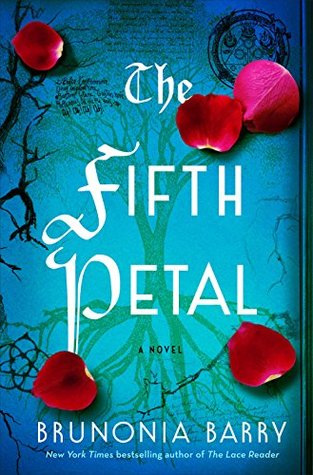
The Fifth Petal, by Brunonia Barry***

thefifthpetalA teenage boy named Billy Barnes dies on Halloween night; everyone knows that he was trouble, and no one is too surprised to see him come to a bad end. But police chief John Rafferty has a job to do, and he sets out to discover who the killer is. The setting is Salem, Massachusetts, the location of the Salem Witch Trials centuries ago and now the Mecca of Wiccans and others that practice witchcraft of various types, not to mention throngs of tourists that show up every autumn.  Chief Rafferty wonders what the connection is between this murder and those of 25 years earlier, dubbed “The Goddess Murders”.
Thanks go to Net Galley and Crown for the DRC, which I received free in exchange for an honest review. This book will be available to the public January 24, 2017.

Barry is an experienced novelist, but her work is new to me. This title can be read as a stand-alone novel, but there’s a tremendous amount of detail here. Perhaps having read The Lace Reader, an earlier novel that other reviewers tell us has some of the same characters that are present here, would make this book less complicated and easier to sort through; then again, if Barry had chosen fewer secondary threads to follow, the reader could relax more and enjoy the book anyway. More on that in a minute.

Rose Whelan is a Salem native, has shouldered the “unofficial blame” for the Goddess Murders; she maintains that a banshee took up residence in her body and left her with no choice. Rose has gone from the psych ward, to homelessness, and back again; Rafferty and his wife Towner have offered her a room indoors, but she won’t leave the tree outside their home for long at a time, lest bad things happen. She has bad memories, and they give her unquiet dreams:

“On that horrible night, after it happened, after the shrieking stopped, the world had quieted and then disappeared.  Rose had found herself staring into an eternal emptiness that stretched in every direction and went on forever.  When the keening began, Rose had believed that the sound was coming from her own lips. Then she’d seen the tree limbs and branches start to move with the breath of the sound itself, their last leaves burning in the black sky like crackling paper. Then the trees had begun to speak.  Come away now, the trees had said. Come away.”

The imagery here is amazing, as you can see; this aspect is the story’s greatest strength.

Our protagonist is Callie, who’s new in town. Rose had been her surrogate mother after her mother, one of the Goddesses, died. She had lost contact with her and is stunned to find her in such bad shape.  Brunonia does a fine job of highlighting the challenges of helping the homeless, not to mention the stereotypes that follow them. There’s a lot of Celtic lore that I also really like reading about.

The parts that disturb me are those throughout the book that reinforce the stereotype of women as being constantly in competition with one another, unable to get along and help each other.

However, the main thing that gets in the way of this being a really great read is the vast amount of detail about way too many things. At the 60 percent mark, my notes indicate that I wish the author would decide what, other than the primary plot line of the whodunit, she wants to feature. We have witches past; witches of the present; mean nuns; and way more about the healing properties of quartz bowls than I ever want to hear about. At this point in the book I am ready to throw in the towel and call it a 2 star read; I felt as if the mystery had degenerated into a New Age infomercial. I note that I can scarcely recall who’s dead, and who’s accused.  But it’s a DRC and I have an obligation, so I forge on.

And that diagram! The diagram of a five-petal flower is created, changed and discussed in such infinite, numbing detail that my eyes are half-crossed by the time we make our way to the climax. Once we’re there, though, the story becomes more cohesive and I like the way she resolves it.

Those that have read Barry’s other books and liked them will enjoy this one; likewise those that are drawn to various aspects of modern spiritual healing and Wiccan practices will also be pleased. For myself, I would enjoy her work more if she didn’t try to jam such an extensive collection of minutiae into a single novel.

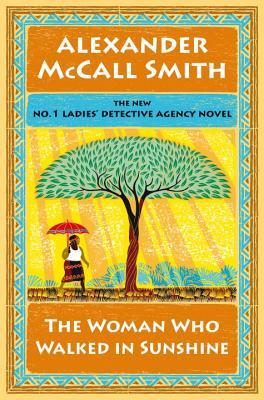
The Woman Who Walked in Sunshine, by Alexander McCall Smith*****

thewomanwhowalkedThe first week or two after Christmas is a sumptuous period for me as a reader. Nearly every book I read these days, fiction or non-, is a DRC, or Direct Reader’s Copy sent to me digitally by publishers via Net Galley in exchange for an honest review.  However, each year there are invariably half a dozen titles, sometimes more, that I really want to read and haven’t been able to obtain free of charge. Sometimes I discover a book after it’s already been published some time ago, and sometimes it’s a book that I couldn’t get as a DRC. These books land on my wish list, and my family is faithful in purchasing them and placing them, clad in pretty paper and ribbon, beneath our Christmas tree. By Christmas night, I’m snuggled deep beneath a pile of fluffy covers, my spouse and hound dog snoring sonorously while I immerse myself in the books I am just about guaranteed to love, bathed in a soft yellow bedside light. This ritual is as significant to me as the more widespread traditions of feasting, wrapping gifts, and hanging stockings. I can’t recall a Christmas without it.

This year we had our gift exchange on Christmas Eve, and by bedtime I was snuggled up in flannel and reading this paperback book, the 16th in the series. The series, for those unfamiliar, is of the cozy variety rather than the pulse-pounding thrillers that absorb a good portion of my reading life. Precious Romotswe is the owner and founder of the #1 Ladies Detective Agency, and a good portion of those that read this book will already be familiar, as I am, with the main characters and their stories. Mma (Ms.) Ramotswe is married to JLB Matekone, who owns and runs the automobile repair shop adjacent to the detective agency; Mma Makutsi , Mma Ramotswe’s eccentric but capable assistant, believes that it’s time for her mentor to take a vacation. And indeed, Precious has never gone on holiday before; it’s about time, isn’t it?

Mma Ramotswe is reluctant. She hates to leave her business in anyone else’s hands; then too, she’s disconcerted when she learns that her husband, his employees, and her own assistants have discussed her need for time off when she wasn’t present. Is it a conspiracy, or is it loving concern?

The mysteries to be solved include the problem on which the temporary assistant hired on for the duration of Mma Ramotswe’s holiday stumbles; an additional situation involving a child named Samuel, an orphan who’s been trained to shake down drivers for coins in exchange for not damaging their cars; and a new school bearing her signature “#1 Ladies” logo, which appears to be not only misappropriating her trademark, but shady in other ways as well. Yet much of the story is dedicated to character development and the personal lives of the main characters, and it’s this that keeps me coming back.

Ultimately, the story is about trust, kindness, and learning to let go sometimes.

It occurred to me for the first time that I don’t know how the majority of Botswana feels about this series. McCall is a native-born Botswanan with Scottish predecessors. Are these characters true to the way the people of color in Botswana see themselves and their people?

Yet another part of me recalls that we are in the land of fiction. Unless I see some sign that the series is objectionable or offensive to those it represents, it will continue to be a happy retreat for me.

Highly recommended to those that love a cozy mystery and an opportunity to drop their blood pressure; the mesmerizing cadence here is better for us than any bottle of pills, and far cheaper than therapy.

Best of 2016: Mystery

This category includes everything within the same zone: thrillers, suspense, detective fiction, crime fiction. If it’s related, I’m rating it here. I expected this to be my toughest call because I read so many books of this genre, but when I had a look at the original titles I’d seen this year, and then eliminated those crossover novels that had already been awarded as the best of some other genre on this site, it was down to three books. Unbelievable…but not at all mysterious.

MY TOP THREE: