The Morningside, by Tea Obreht****

In 2019, Tea Obreht blew me away with Inland, a work of historical fiction—alternative history actually—so creative that I haven’t stopped thinking about it to this day. Her new book The Morningside is a dystopian novel that, while not as remarkable as the previous effort, is both intriguing and memorable.

My thanks go to NetGalley and Random House for the invitation to read and review. This book is for sale now.

Our protagonist is Silvia, and she and her mother are refugees from a homeland made dangerous by violent political turmoil. They were invited to live in The Morningside, a once grand old building fallen into disrepair by the flooding that comes with climate change. Silvia’s aunt, who arrives first, and her mother are to be caretakers and participate in the resettlement program.

At eleven, Silvia is full of questions. Her mother never talks about her father or about the past. Her aunt has photographs and stories; her mother is like the librarian that just wants everyone to stop talking. She is consumed by her fears. We readers have to wonder which of them is more realistic. Should the aunt stop blabbing, or should Sil’s mother get a grip? Silvia clearly prefers her aunt’s approach, but then, Sil is just a kid.

There’s a considerable wait list to get into school, so in the meanwhile, Silvia is bored, and bored kids have a tendency to get into trouble. Silvia becomes obsessed with the reclusive artist that lives in the penthouse. Nobody talks to her, because nobody is supposed to bother her. The one obvious thing about this neighbor is that she leaves home at the same time each day with her three dogs.

Silvia becomes convinced that the woman is a sorcerer whose dogs transform into humans—her three sons—for a portion of each day. My initial reaction is the same as her mother’s: don’t be ridiculous, Sil. Leave that poor woman alone. But then it dawns on me that this is fiction, after all, and this is Obreht, so…could the woman have supernatural powers?

Silvia is assisted twice in her spying mission, first by a neighbor that goes by Lam, and that is willing to exchange a pass key to enter the artist’s home for mail that was sent to him after he moved out.  I wonder about this; an eleven year old is approached by an adult man for secret purposes. What could possibly go wrong?

Her other confederate is a girl her own age whose family moves into The Morningside.  How starved Silvia has been for a peer!  Yet this girl is even gutsier than Silvia, and she leads her into dangerous waters more than once.

That’s all I’m going to tell you, except that the story is fresh and original, and although I tend to be skeptical when it comes to this genre, there is never a moment when I find myself stepping back and saying, no way.

With a young protagonist, one might be tempted to say this is for young adults, and that’s possible; yet the vocabulary is advanced enough that the younger reader had better have extraordinary skills in reading and comprehension, not to mention stamina.

I recommend this novel to those that love the genre.
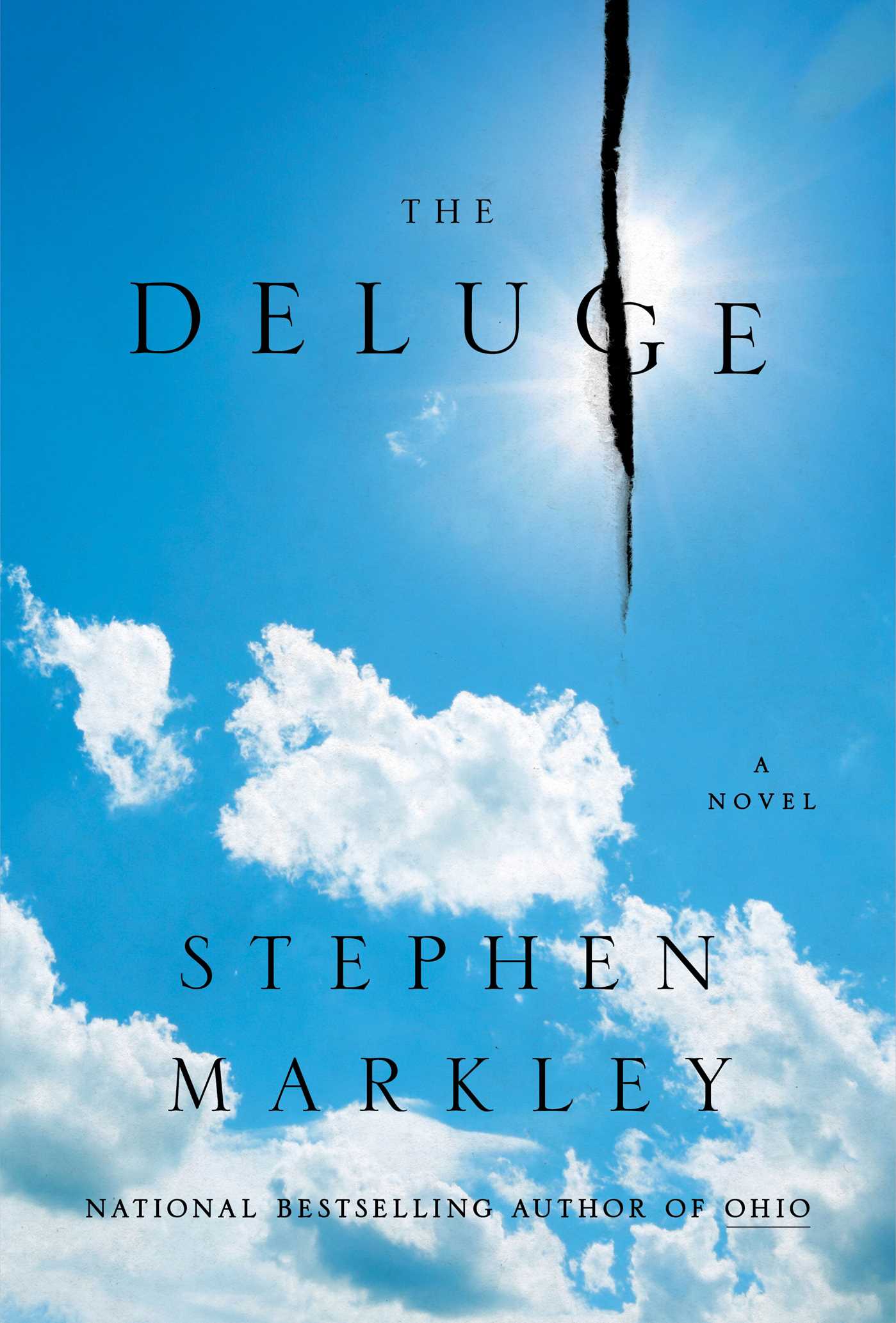
The Deluge, by Stephen Markley**

Markley’s debut novel, Ohio, came out in 2018, and it was one of the year’s best that I promoted at the end of the year. I loved it so much that I was convinced that anything this author wrote would be golden. So when Simon and Schuster invited me to read and review his next book, The Deluge, I was delighted. But although I am grateful to the publisher and Net Galley for including me, I cannot bring myself to finish this thing. I suspect Markley may have bitten off more than he can chew, because it’s kind of a mess.

To be fair, I have only read the first twenty percent, but since the book is 900 pages in length, that’s a chunk.  After all of that, I can’t even keep the characters straight, let alone bond with them. One character, Kate, seems to hold the most promise, but just as I begin to develop interest, we transition to a different character—or news article, or whatever—in a manner that feels abrupt and jerky. Some of these characters appear more than once, and other may have, but I’m not even sure of it. There’s one horrifying rapist that speaks to the reader intimately and in the second person, and he gives me the heebie-jeebies so badly that I am glad to move on to someone else. That guy—whatever his name is—and Kate are the only two I can identify, sort of. I’m a language arts teacher. Good luck to everybody else.

I do understand that the overall message has to do with the environmental ruin that is marching toward us at an alarming pace. Markley isn’t wrong to sound the alarm, although it may in large part be a case of preaching to the choir; the most concerned among us are probably the most likely to read this book. At the same time, some of us have been following this horrifying debacle since the ‘70s, or the ‘80s, and when one is already virtually hyperventilating with alarm over this issue, reading this novel doesn’t do much good.

But more to the point, fiction is an excellent medium to promote an urgent political cause, but it’s only effective when the other story elements are outstanding. When the format doesn’t do justice to the characters or provide clarity to the reader, the effort is wasted.

I read other reviews saying that if one patiently reads the chaotic scramble at the beginning, eventually it will all come together and make sense, but honestly, if nothing makes sense two hundred pages in, then you can stick a fork in me, cause I’m done.

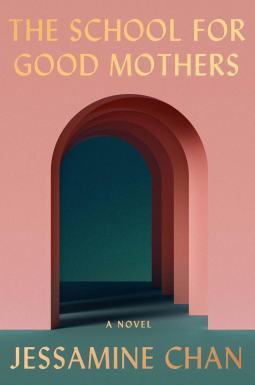
The School for Good Mothers, by Jessamine Chan**

So much build up; so much promise. What a crying shame. This dystopian novel is conceptually strong, addressing the invasive nature of facial recognition software and government access to what should be private digital communication, but the execution is abysmal.

I received a review copy from Net Galley and Simon and Schuster.

Frida Liu is a new mother, and she’s got problems. She has severe postpartum depression, and she’s home alone with her baby, all day and all night, trying to work from home. She doesn’t want childcare; she wants to be with her daughter, Harriet, but she’s overwhelmed. The original plan was for her to be the stay-home mother, with her husband supporting the family, but at the same time Harriet was born, her husband fell for someone else.

One day—“just one bad day”—she is summoned in to work. She could have brought Harriet with her, or she could have called a sitter, but instead, she leaps into the car, leaving the baby in her bouncy chair at home, all alone. She tells herself she will quickly drop off and pick up info, and then she’ll zip back home, but instead, she allows herself to be caught up in reading and answering emails. Eventually, her phone rings. The caller tells her that her baby has been removed from her home by the police; neighbors were alarmed by the baby’s nonstop screams. Now, Harriet is going to live with her daddy and that woman, and there’s not much that Frida can do about it.

At the outset, I think this is a brave scenario for an author to choose. Leaving a baby under the age of two, which some would contend is the very worst age to leave a child unattended, is no small matter, and I am eager to see how Chan will play this. How will she keep me on Frida’s side in all of this?

Turns out she won’t.

I have seldom seen a less sympathetic protagonist, and clearly, Chan doesn’t intend for Frida to be a villain. Yet in all of the puling, the whining, the self-pity, Frida’s prevailing concern isn’t for her child’s well-being, it’s for herself. She needs her baby. She wants her baby. She wants her baby to want her. And so it goes.

But wait, there’s more. The worst thing of all is that this eighteen-month-old baby is not accurately depicted developmentally. Discussions around the care of Harriet are premised on Harriet’s ability to understand abstract concepts that no child this age is capable of. At first, I anticipate that it’s only Frida that holds these expectations and that others—her ex, or the professionals within the child welfare system—will set her straight, but no, they all buy into these assumptions as well. Then I wait to see if there is some aspect of this futuristic, dystopian world that renders children different from those in our real world today; nope! At one point, Harriet bites someone, and Frida tells her to “apologize at once!” This is a kid barely old enough to walk. Give me a fucking break!

The plot wanders and Frida wallows; at about the 30% mark I commence skimming. I read the last 25% carefully to be sure there’s no grand aha, no surprising event that causes all of this to make sense, or at least to mitigate it, but there’s no redemption to be found. Where are the editors? There are editors, right? How did this wasted trainwreck of a novel end up on Oprah and other prestigious lists and websites? I just don’t get it.

Not recommended.

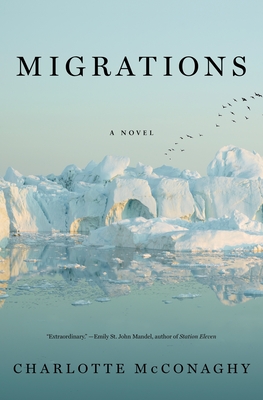
Migrations, by Charlotte McConaghy****

My thanks go to Net Galley and Flatiron Books for the review copy. I alternated my digital copy with the audio version I found at Seattle Bibliocommons; the reader does a fine job, and so if you want this book, you can’t go wrong in terms of print versus sound.

This is either exactly the right time to read this book, or exactly the wrong time.

Franny Stone has never been happy staying in one place, and now, when the walls are about to close in on her, she decides that one final voyage is in order. The Artic terns are about to make one final migration, and she means to go with them. Posing as a marine biologist, she persuades a fishing crew to take her along; she has the data to follow the terns, and the terns are following the fish. It’s in everyone’s best interest to work together here, now that so many species are extinct and the fish are so scarce. Once in motion, however, few things go according to plan.

The setting is the future, at a time when humanity has depleted most of the world’s wildlife. It is bleak, bleak, bleak.

Much of the story revolves around Franny’s character, and since we know from the get-go that she doesn’t intend to return alive once this trip is done, there are two questions that keep me turning the pages. I want to know why she wants to die, and of course, whether she does. The reason for her morbid plans is spooled out to us in small bits; whether she dies at the end is something the reader must learn for herself.

As for me, I had huge expectations by the time I began reading, because this novel shot up to bestseller level almost overnight. Perhaps that’s why I felt a trifle let down when it was done. It’s a good story, but I wouldn’t call it one of the year’s finest. Certainly, there is moral gravitas behind it, and yet those most likely to read it are not climate change deniers. For me to have loved this story, I would have needed more hope and less utter despair. When a story starts sad and ends sad, the little places in which it is slightly less sad aren’t enough to bond me to the narrative.

On the other hand, I am just one reviewer. There are a whole lot of readers out there getting all the feels and loving them. I recommend this story to anyone looking for a catalyst for a good ugly cry.