
Those We Thought We Knew, by David Joy*****

David Joy is a brilliant writer. His stories, set in the Carolina mountains that he calls home are resonant, visceral, and always about believable characters that hail from the hardscrabble working class. Those We Thought We Knew is his best. My thanks go to Net Galley and Putnam Penguin for the review copy. This book is for sale now.

Sylva, North Carolina is the sort of insular, homespun community that you don’t see much of anymore. Everybody knows everybody, not only by name but by family, religion, and a host of salient details that form their backstories. There’s not a lot of traffic in or out of Sylva, nestled as it is in a hollow of the mountains. Now, however, two newcomers have arrived, but they aren’t together. Surely not. One is a lowlife vagrant, a pencil-necked, mullet-headed, greasy drunk in an ’84 Caprice named William Dean Cawthorne. When the sheriff’s deputies roust him, one of them finds a small notebook that contains some surprising names; he also has a long, white robe in the car, and with it, a conical white head covering with eyeholes in it. Mr. Cawthorne, you see, is a recruiter for the Klan.

Toya Gardner comes to town at about the same time to visit her grandmother and work on her thesis. She’s a graduate student from Atlanta; she creates meaningful African-American sculptures and other art works. But when she finds the statue of the Confederate soldier in the town square, she is inspired to make a different artistic statement than she’d originally planned, and when she does, all hell breaks loose.

This searing story sees two terrible crimes unfold in sleepy little Sylva. The dynamics that exist between the county sheriff, the Sylva police force, and the local citizenry—particularly Toya’s family—are rich and complex, and they showcase Joy’s best character development to date. In the end, we must concede that alongside the horrors represented by overt white supremacists, the more chilling may be that which simmers below the surface of men and women that, yes, We Thought We Knew.

This is brave writing. Joy will no doubt be the subject of some unfriendly attention because of it. My hope is that it draws the accolades that it deserves from those that seek true social justice, and that it will inspire useful, critical introspection and conversation on the part of its readers.

Highly recommended.
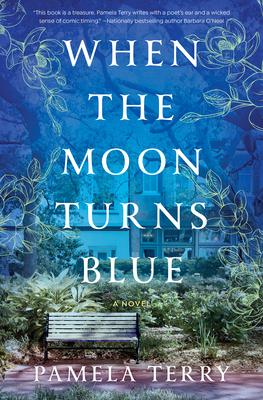
When the Moon Turns Blue, by Pamela Terry*****

Once in a while the odd thing happens,

Once in a while the dream comes true,

And the whole pattern of life is altered,

Once in a while the moon turns blue.

The tiny Georgia hamlet of Wesleyan is preparing to bury one of its own, and Mother Nature is preparing to cover the entire town in ice. But nobody—well, almost nobody—knows that a source of local tension is about to go nuclear, as someone is planning to topple and destroy the statue of a Confederate general in the park inside the boundaries of Old Man Griffin’s land. “The fight was just getting going good, and now somebody’s declawed the cat.”

This riveting, curiously charming and sometimes hilarious novel is the second by Pamela Terry, whose outstanding debut novel was The Sweet Taste of Muscadines. This one may be even better. My thanks go to Net Galley and Random House Ballantine for the invitation to read and review. This book is for sale now.

With the death of Harry Cline, we find ourselves at his funeral, a massively attended affair. But his wife, Marietta, develops a disabling, blinding migraine, and although they have been on the outs for years, Butter, her (former) best friend, comes to the rescue. By the time they’ve snuck out the side door of the church, we already know at least a little about both women, and now we want to know everything.

With just two novels published, Terry has already proven herself to be among the best authors when it comes to character development. Soon we’ll meet others—Marietta’s obnoxious brother, Macon and his beleaguered wife Glinda, who will have a large part in this story and is one of my favorite characters, as well as a host of others, who have smaller roles but are each so unmistakably established that it’s no work at all to keep track of them. But perhaps her finest achievement here is in creating a masterpiece that is ultimately a feel good book, despite the use of a red hot real world controversy within its pages.

I generally read several books at a time, and this one is the one that I saved for bedtime, because I wanted to be able to read it uninterrupted, and it is the one I wanted in my head when dreams came. It didn’t let me down.

This inspirational work of Southern fiction stands shoulder to shoulder with the finest classics, To Kill a Mockingbird and Fried Green Tomatoes. I wholeheartedly recommend it to you.