
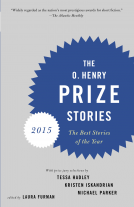
 Well of course it’s a five-star book; these stories are the winners! And having just read them, and changed my mind over and over as to which was my real favorite, rather like being at a banquet and being served all of one’s favorite foods, I was at something of a loss to find one that rose above the others…until the very end, and if I had to choose one of them, that would be it. That one, or Russell Banks’s “A Permanent Member of the Family”, a poignant, terrible, magnificent story that I had actually already read and reviewed about a year ago in a collection by that author. So, it goes without saying that Banks is a giant, and I just sort of set him aside with the knowledge that he was untouchable, and then read and compared the rest. But why take my word for it? Don’t just listen to me! Look here at how I’ve rambled on forever without mentioning that I got this book scot free (lucky me) from Net Galley and Knopf Doubleday Publishers in exchange for an honest review. This outstanding collection will be available for purchase September 15. I don’t know how you can bear to wait that long!
Okay, let’s try this again. See, it’s almost impossible to compare them, but here are some things I can say about the collection as a whole: first, that it is a multicultural collection, but it doesn’t appear to me as if anybody laid out special rules that said anyone had to vote for this, that, the other culture. They’re all really strong. There was never a moment where something went thud and I wondered how the hell that story got in here. I obsessively made notes on my kindle whenever I came to something that was funny, interesting, or—oh especially this!—when I found incredibly effective, purposeful figurative language. If I still taught (well okay, if I still taught, I wouldn’t have time to read galleys), but if I still taught, I would get a good hard copy of this book to slide under the projector in order to illuminate what the various types of figurative language look like when they’ve been used well. If I still taught and had an actual book buying budget, I would get an entire class set so that students could go through and find the passages for themselves, which is actually a much more powerful way to teach, and then I’d have them write their own stories and be gob-smacked by how much they had improved over the course of a week or so, just from reading a few choice, selected stories.
But I don’t teach anymore, and I do read a lot of books and write a lot of reviews, and I am telling you, this is better than what I generally read, and I’ve been reading good stuff, too. The last story in the collection, “Birdsong from the Radio”, by Elizabeth McCracken, is not only outstanding, but it’s chilling, horrifying, and absolutely fabulous read-aloud material for the month of October.
But if, like me, you no longer have anyone except other adults surrounding you now, you should get this collection for yourself. Read it on the beach; in a chilly, air-conditioned motel room; or snug by the fire this fall. Because this is what excellence looks like. It’s gluttony for the voracious reader, and extremely tempting, I should think, for the reluctant one.

 Seattle Book Mama