The Portable Veblen, by Elizabeth Mckenzie*****

theportableveblen“There is a terrible alchemy coming.”

Veblen has led an insular life, focusing her energies on genealogy, a love of nature, and oh dear heaven, her mother. The fact is, her mother is both dominant to an extreme degree, and frankly more than a little bit squirrely. But when Veblen meets Paul, her life changes dramatically; but even more so than most young women, she finds that she needs to be flexible to accommodate Paul, whose needs are different from her own.

A huge thank you goes to Net Galley and Penguin Random House Publishers for permitting me a DRC. I nearly let this title pass unread by me, thinking, because of the cover art, that it was going to be a cutesy animal story, its humor no doubt cloying. I could not have been more mistaken, and so thanks are also due to whatever journalist’s review was posted in my hometown newspaper. Realizing my error, I rushed to the computer to see if it would still be possible, at this late date, to read it free.

It was indeed.

Dr. Paul Vreeland, neurologist and researcher, seeks some normalcy and order in his life. He was raised in a communal environment by parents determined to avoid the rat race and its social conventions as well. All of them. Had he been raised in an urban environment, someone would have probably called the authorities and had him removed from the filth, the drugs, and oh yes, the dreadful embarrassment. When he meets Veblen, he senses that she is fresh and unpretentious, but does not fully grasp just how much she wants to be like his parents—well, minus the drugs.

When Veblen is under stress, she starts anthropomorphizing squirrels. She is certain she can talk to them and that they understand what she’s saying. The stranger her mother behaves, the more Veblen is drawn to squirrels.

And now, a personal note. A good friend of mine took a respite from the grinding, long hours of social work, and for awhile she worked as a wedding planner. It didn’t last long. Having had so much experience dealing with disparate personalities in her initial career, she often felt the urge to hurl herself between the prospective bride and groom, upon whose union tens of thousands of dollars was being lavished. She wanted to cry out, “Just get away from each other, both of you! This marriage will be over before the year is over, so just don’t go there!”

And this is what I wanted to do as of the 33 percent mark. I wanted to haul Veblen back to the rundown cottage she occupied by preference, and haul Paul back to his state-of-the-art medical facility, and have them never see one another again.

Then again, their relationship is hysterically funny, and all of us can use a good laugh, followed by another, and yet another.

The reader can approach this hugely original tale on one of two levels. It can be read as literary fiction, with the squirrel as metaphor. Or one can just read it, and sit back and howl with laughter.

One way or the other, this unbelievably clever, hilarious book is available for purchase now, and it is highly recommended to everyone.

Where All Light Tends to Go, by David Joy*****

WhereAllLightTends“Dead men tell no tales, Jacob. The ones left to living are the ones who write the history.”
I received my DRC courtesy of Net Galley and Putnam Penguin publishers in exchange for an honest review. This title is available for purchase.

Jacob McNeely is a teenager in Cashier, North Carolina, a tiny  town deep in the crags and hollows of the Appalachian Mountains. His mother is a crank user recently released against his father’s wishes from a psychiatric hospital. Jacob has always wished she might turn into a real mother, but it isn’t going to happen.

His father is the local drug czar, with cops on his payroll and a wide variety of other employees as well. He uses McNeely’s Auto Garage to launder his drug money. If any clueless tourist should come by, he gives them a quote so outrageous they take their business elsewhere. Locals foolish enough to cross him or get in his way find themselves and their vehicles in a deep, watery grave yard. That’s if the abused, underfed Walker coonhounds that are tied up at intervals throughout his property don’t kill them first.

Jacob walks a careful tight rope just in order to stay alive. He doesn’t like the life he leads, but he doesn’t see a way out. That is, unless he can run away with Maggie, the girl he has loved since childhood. Maggie is cut out for greater things; Maggie should go to college and escape the danger and poverty of Cashier.

If only Jake could go with her.

Joy is a gifted writer. His stark prose is chilling yet poignant, and so arresting that the reader will be hard pressed to set it down once it’s begun. But you may think twice about reading it at bedtime.

Where does all light tend to go? The allegory is heavy but sophisticated. Perhaps all light goes toward heaven, the candle that reminds us of the existence of God.

Or it’s possible that all light just goes out.

Searing, wrenching, and deeply affecting, this is a book to remember long after you’ve forgotten everything else you’ve read. Highly recommended to adults. Definitely not for children or adolescents.

Simply brilliant!


Major Pettigrew’s Last Stand, by Helen Simonson*****

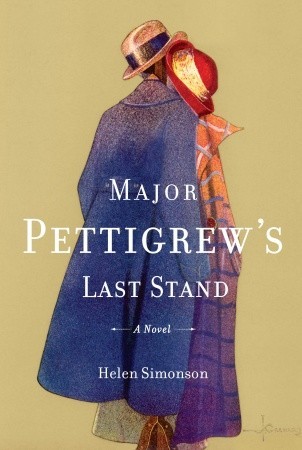
majorpettigrewHad this story not received such wide acclaim and been made into a movie (which I’ve yet to see, but I watched the Oscars), I would probably never have gone near it. I like working class protagonists, and I don’t read many romances, because often as not, they are corny, soft porn, or both. But I saw it at the library and decided to give it a try, and I quickly remembered, upon reading it, that some rules are made to be broken. So even if you usually don’t read romances, and even if a retired British pensioner is not your idea of an interesting protagonist, this should be the exception to the rule.
 I loved this story!

Major Pettigrew has difficulty with some sorts of change. He doesn’t want to see his village built up and the green spaces developed. He has lost his wife and his brother, and loss of any type is very difficult. His solitude is not splendid; he is a lonely, lonely man.

And in some ways, he seems to have lost his son, who has become arrogant, dismissive, and wants nothing more from him than his wallet and his bank card.

On the other hand, he has found something really precious, but what he has found is so controversial that the whole wide world seems to be against him.

Perhaps the hook for me was the interracial marriage, since mine is one also. But on the other hand, maybe the hook is just excellent writing. A really great writer can make us enjoy a genre we didn’t think we cared for; I believe this is one of those.

I hit a certain point in this story and could not go to bed until it was done. I usually read lying down before I go to sleep, but I was literally sitting upright on the edge of my bed leaning forward when this climax broke.

You have to read this story. It’s glorious, and it’s available to the public. Highly recommended!

Chasing the North Star, by Robert Morgan****

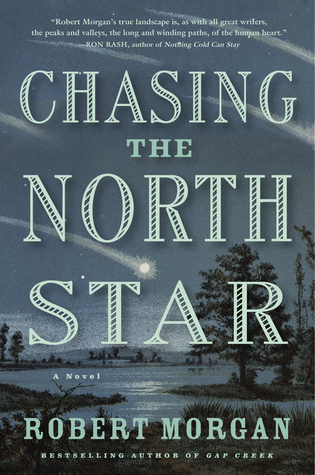
chasingthenorthstarChasing the North Star is a compelling narrative of two teenagers escaped from slavery on their flight toward the North. Thank you to Net Galley and Algonquin Books for the DRC, which I received in exchange for an honest review. This book becomes available to the public April 5, 2016.

Morgan begins with the story of Jonah, a man who leaves the horrific plantation on which he has been kept. His story is told in the third person omniscient, and so there is virtually no dialogue for a long time. I waited to see how well it would hold up; it isn’t easy to keep a reader’s attention for long passages in which everything is told within a narrative, and even more so when it is told in the third person, as opposed to first person, where the character himself tells us the story. And because the narrative combined strong character development, near-tangible setting, and a series of brilliant moves to elude pursuers, I found that my attention was held quite well.

The book is in fact both accessible and a surprisingly quick read.

Part of the way into the story, Angel, our second protagonist, joins Jonah, and she tells us her own story through the first person. I found this device—of switching from third person for Jonah’s story to first person when telling Angel’s—both unusual and congenial. We watch him and cheer for him, but then she talks to us and just lays it all out. And Angel is nobody’s helpless damsel. She tells us up front that it’s a good thing for Jonah that she loves him, because he is going to need her to save his butt, and she does so more than once.

The sparseness of the dialogue makes sense when one thinks about it. Two escaped slaves that do nothing but talk, talk, talk all the way north are going to be caught in a hot minute. The writer takes an intelligent risk in using so much narrative and so little dialogue, and it pays off.

Stories involving slavery are often really painful for African-American readers to mow through, because they recall a time that was so demeaning, not only a physical horror but one that assaulted their dignity. The “N” word appears here, but is used sparingly considering the time in which it is set, and the topic. I appreciated the autonomy with which Jonah and Angel operate. Too many stories of freedom from bondage feature white saviors more prominently than are appropriate.

In fact, my sole criticism of this story is that it does not portray the extent to which the Underground Railroad was run by free Black men and women in the north; but then, this isn’t a story of organized escape, but an independent one, and it is possible that the region in which our characters travel was different in that respect.

Those that love good historical fiction should read this book. Morgan has done a fine job with a difficult topic, and the story is one of triumph and glory.

The Readers of Broken Wheel Recommend****

thereadersofbrokenwheel“What is it with this town?”

Sara comes all the way from Sweden to visit Amy, who lives in Broken Wheel, Iowa. When she arrives, she learns that Amy is dead, yet the townspeople ask her to stay anyway; in fact, they expect her to stay. And once she is there, Sara seems to belong to the town, like the last jigsaw puzzle piece being thumbed into place. She brings Hope to Broken Wheel, both figuratively and literally.

And now I have to pause for a moment in order to acknowledge Net Galley and Sourcebooks for providing me with a galley to review, free of cost. This romantic beach read rates 3.5 stars by my reckoning, and I round those stars upward. I was greatly entertained.

Sara doesn’t have a lot going on back home. She worked at a bookstore, but it closed. At first, upon arriving in Broken Wheel and finding that her host has died, she figures she should leave, but everyone insists that Amy knew she was dying and wanted Sara to use her house for two months nevertheless. They make is sound like a sacred bequest; also, without a volunteer to drive her to the airport, she is sort of stranded anyway. The icing on the cake comes when her parents order her home. What young woman wouldn’t stay right where she is in such circumstances, since she doesn’t need parental funds? Oh heck yes!

The story evolves, developing multiple characters, the town itself, and of course, Sara. Multiple romances pop up. There are problems with pacing and the writing is uneven in its proficiency, but those problems are all within the first third of the book. Once the reader pushes past that point, I can guarantee you’ll want to finish the rest of it.

A fun read, enjoyable for those looking for a fluffy, engrossing book to take on vacation or curl up with over a solitary weekend.

Practical Sins for Cold Climates, by Shelley Costa*****

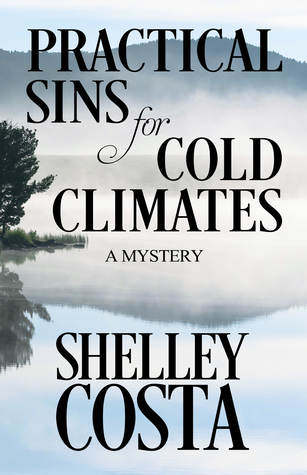
practicalsinsWhat a terrific surprise! Shelley Costa is a contender. This is the first of her books that I have read, although she has won the Agatha Award with her first novel, You Cannoli Die Once, which I have to find and read now. For those that love a snarky, spirited female investigator, Practical Sins for Cold Climates is a must-read. Thank you to both Net Galley and Henery Press for the DRC. The title is available for purchase January 26.

Val Cameron has been sent out to Lake Wendaban, which is out in the middle of nowhere way too far from Toronto. Worse, she has been directed by her boss to find Bob’s Bait Shop in order to be directed to the home of a reclusive writer with a hot new book that her publishing house covets. She figures it will take two days to achieve, since the train just goes once each way per day. Get off; take a day to get to the writer and get the signature; and then the next day, she can be back in her own Manhattan apartment, away from the bears, the mud, the snakes, the invertebrates. Done deal. Because the fact is, “She wasn’t a bait-buying kind of gal.”

Of course, it doesn’t go as quickly as she had hoped. What kind of story would that provide us? For starters,

“There had to be some mistake. Where was the town?
“When Peter Hathaway, her boss, first told her she had to get to the town of Wendaban, Ontario, she figured on awnings and sidewalk café seating. Some charming cross between Fire Island and Bedford Falls…Barbershops and garden clubs. …Had the train let her off pre-maturely, say, at a whistle stop? Some little pre-station station where you just had to wait while the moose crossed the tracks?…The town looked like the outskirts of itself.”

By the time Val successfully navigates the terrain—think of a cross between Mirkwood Forest and Venice, where the only way through all those hostile damn trees is by all-too-rare boat ride—she has learned of a murder that took place awhile back, but has never been solved. Once she is stuck out there in mosquito paradise, it occurs to her that it would really be a journalistic coup to sign the author AND solve the murder! Her career would take off like a rocket. No more doomed adventures in the hinterland, thanks. She can’t believe people actually paid money to come sit in the middle of the wilderness!

Stuck waiting for a ride out to the author’s almost-inaccessible cabin, “Val spent the night at the Hathaway cottage, listening for noises that portend god-awful death. Snuffling, growling, clawing, heavy footfalls, buzzing chainsaws, that sort of thing. When nothing materialized, she realized she’d been condemned to a day in somebody else’s paradise.”

This book made me laugh out loud all the damn time! I started considering it my reward for slogging through a few pages of a less desirable galley. But at the three-quarters mark, the casual city girl snobbery recedes as one discovery leads to another, and the tension is thick, tight, and unmistakable.

I fell for two red herrings Costa casually dangled, but she did cheat the reader a trifle by introducing late, new plot elements necessary to the solution; we really can’t figure it out without the information provided around the 90% mark. So for this, I should probably lop off half a star, but I’m laughing too hard to change my rating. Sorrr—eee.

When the last page was turned, I wanted more, and I realized that although there was no “Val Cameron #1” below the title, this could indeed become a series; in fact, it could become another Edgar winner. Oh, yes please! And I was gratified to discover while reading the notes that more Val Cameron mysteries are planned. Hell yes! I will be avidly prowling the Henery Press section of Net Galley looking for new opportunities to read and review this series as it unfurls.

In a nutshell: fan-damn-tastic. This is a terrific book in which to bury oneself on a holiday break or even a long, cold weekend. Not a bad beach read, either for that matter. Just buy it. Just read it!

The Sunlit Night, by Rebecca Dinerstein *****

thesunlitnightWhen was the last time I read something this poignant? No, it’s more than poignant. This novel is a real powerhouse, and my heartfelt thanks go to Net Galley and Bloomsbury, USA for letting me read it as a DRC. It affected me to the extent that I needed to let it steep in my mind for a few days after I read it, before I could review it. That’s always a good sign.

You see, Yasha has grown up without his mother, at least for most of his life. He, his father, and his mother all received much sought-after plane tickets to the USA from Russia. Not all were scheduled to depart at the same time, and not all of them did. And so Yasha and his father have lived above the bakery, and now and again they phone to see when Mama might be coming. It isn’t like she is dead or in jail. She just hasn’t come. She puts them off; she makes excuses. So Yasha helps his father run the bakery, rising early every day and jetting home from school promptly when the bell dismisses him. Season follows season,and year follows year;the loss grows deeper and stronger, as does his bond with his father, a flour-speckled, graying eccentric with the world’s kindest heart. His father is his life, and the place where his mother once was is a constant void. “No mother. No mother. No mother.” Unless you are made of brick or cement, you have to feel his pain.

I think the narrative that alternates here, that of Frances, who is destined to meet Yasha, is supposed to be equal in force, but to me she is an also-ran. The book is really about Yasha, and I am fine with that. Frances also hails from a family that is coming unstuck; her parents have given her and her sister notice that they need to get out of the tiny Manhattan apartment in which they grew up, because they are going to separate.

At the same time, Frances’s boyfriend, the man she loves so much that she has turned down a prestigious art fellowship in order to follow him to the ends of the earth, dumps her. Doesn’t even stay with her till she boards; he just leaves her there all by herself, hurt and stunned. He’s gone.

Yasha and Frances will meet at the top of the world, or the nearest possible place. It’s in Norway, not far from where the Sami hunt reindeer. In the summer, the sun never goes down.

Generally I am not a reader of romances. I am perhaps too cynical; I hear the violins starting up and slam the book shut. No schmaltz for me, thank you kindly. But once in awhile an amazing story comes along. Think of The Thornbirds; think of The Prince of Tides. The Sunlit Night is such a story, an exceptional story for which rules were meant to be broken.

It comes out in June, and you just have to read it. Don’t let yourself be left out.